
Low-Maintenance Perennial Flowers: A Beginner’s Guide to a Stunning, Stress-Free Garden
Effortless Beauty: The Top Hardy Perennials That Bloom Year After Year (Without the Constant Work)
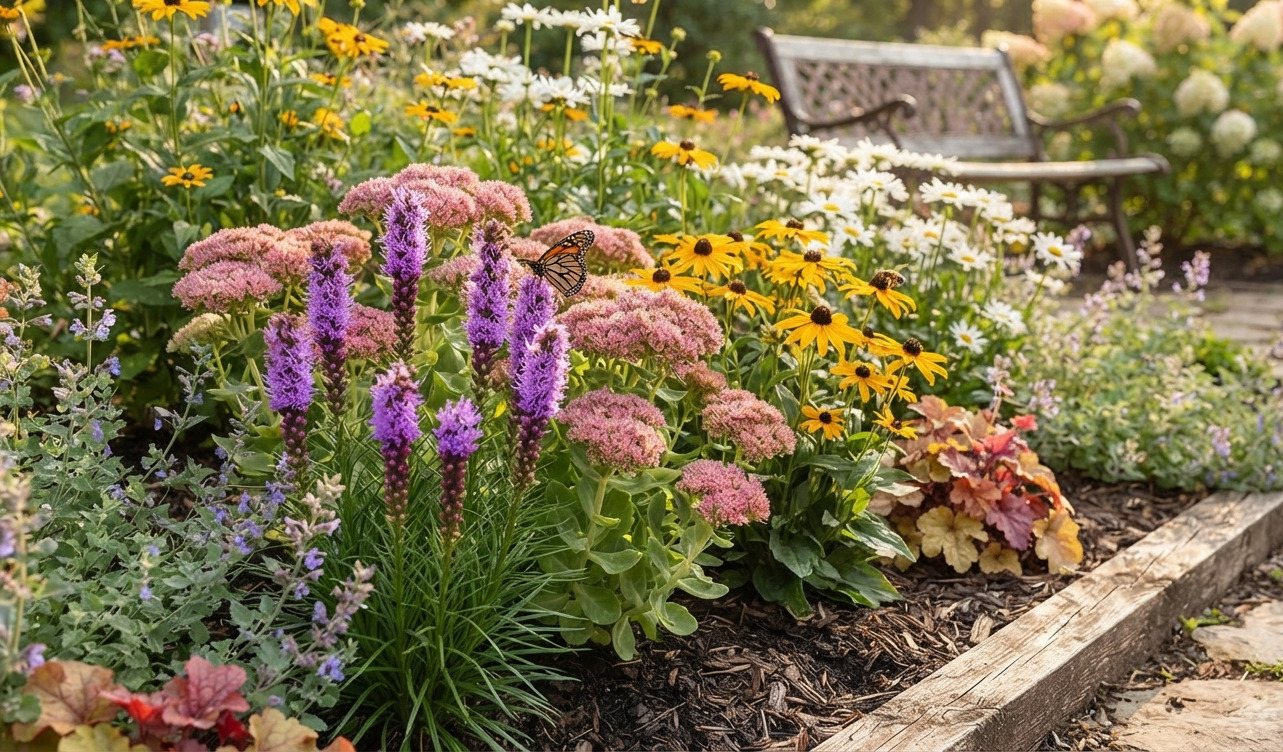
You can create a beautiful garden without spending every weekend working in the dirt. If you want a garden that gives back more than it takes, low-maintenance perennial flowers are a great choice.
Unlike annuals, which only live for one season, perennials establish deep roots. They come back year after year, often growing stronger and more beautiful each season. Whether you have a small balcony or a big backyard, adding the right perennials helps you build a lovely garden that thrives with little effort.
A Garden Story: The Joy of “Set It and Forget It”
I remember my neighbor, Sarah. Every Saturday morning, she worked hard in her garden, replacing wilted flowers. She wanted her garden to look full, but she often felt tired from planting, watering, and pulling out dead plants.
One spring, she changed her approach. She cleared part of her flower bed and planted low-maintenance flowers like Sedum (Autumn Joy), Purple Coneflowers (Echinacea), and Shasta Daisies. In the first year, she did the initial planting and some weeding. By the second year, the perennials grew well and naturally crowded out the weeds.
Now, Sarah relaxes on her patio with coffee, watching butterflies in her beautiful, self-sustaining garden. She has regained her weekends, and her garden looks better than ever.
Why Choose Perennials?
-
Longevity: Some perennials can live for many years—even up to a hundred years—if they have the right conditions.
-
Pollinator Power: Most are magnets for bees, butterflies, and hummingbirds.
-
Hardiness: Once established, they are better equipped to withstand fluctuating weather than annuals.
Pro-Tip for Success: Think of your perennials as the main part of your garden. Use them for permanent borders and to create structure. Then, add some annuals to bring in color during the summer.
Top Low-Maintenance Perennial Flowers for Your Garden
| Plant Name | Hardiness Zones | Sunlight Needs | Best For |
| Liatris (Blazing Star) | 3-8 | Full Sun | Pollinator Gardens |
| Sedum (Autumn Joy) | 3-9 | Full Sun | Drought Tolerance |
| Cranesbill Geraniums | 4-8 | Part/Full Sun | Ground Cover |
| Astilbe | 4-9 | Part/Full Shade | Shady Corners |
| Catmint (Nepeta) | 3-8 | Full Sun | Rock Gardens |
| Daffodils | 3-8 | Full/Part Sun | Early Spring Color |
| Rudbeckia (Black-Eyed Susan) | 3-9 | Full/Part Sun | Long-Lasting Blooms |
| Hostas | 3-9 | Partial Shade | Foliage/Texture |
| Peonies | 2-8 | Full Sun | Elegant Cut Flowers |
| Russian Sage | 4-9 | Full Sun | Adding Height/Texture |
| Balloon Flower | 3-8 | Full/Part Sun | Unique Bloom Shape |
| Coral Bells (Heuchera) | 4-8 | Full/Part Sun | Colorful Foliage |
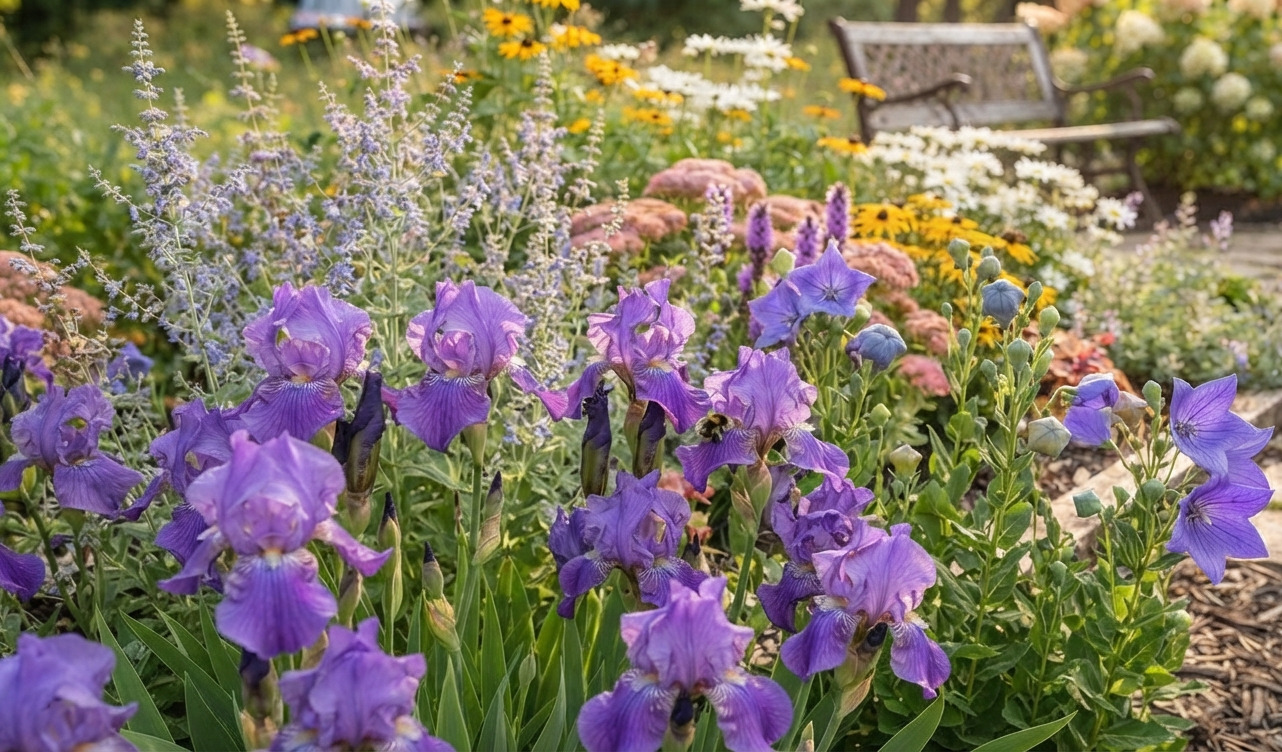
| Bearded Iris | 3-10 | Full Sun | Striking Spring Blooms |
| Yarrow (Achillea) | 3-9 | Full Sun | Ground Cover/Filling |
| Lavender | 5-9 | Full Sun | Fragrance/Pest Repellent |
| Asters | 3-8 | Full Sun | Late-Season Pollinators |
| Bee Balm (Monarda) | 4-9 | Full/Half Sun | Hummingbird Gardens |
| Shasta Daisy | 5-8 | Full/Part Sun | Deer-Resistant Borders |
Essential Care Tips
To ensure your garden thrives, keep these three factors in mind:
-
Understand Your Zone: Always check your USDA Hardiness Zone before you buy plants. Choosing plants that are native to or can tolerate your climate is the best way to ensure they are truly “low-maintenance.”
-
Soil Quality: Most perennials grow best in well-drained soil. If your soil is heavy clay, mix in organic compost before planting. This will give your flowers the nutrients they need to develop strong roots.
-
Deadheading: These plants are tough, but if you remove faded flowers (a process called deadheading) from Yarrow or Bee Balm, you can encourage them to bloom again. This helps your garden look fresh all the way into fall.
Preparing Your Soil for Perennial Success
If you want your new garden to succeed, preparing the soil is the most important step. Think of the soil as the base of a house. No matter how good the plants are, they will struggle if the foundation isn’t strong.
Here’s how to prepare your soil so your perennials can thrive for years:
1. Test Your Soil
Before adding anything to your soil, get a simple soil test kit from a local garden center. This kit will show you the pH level and nutrient content of your soil. Most perennials, like Peonies and Hostas, grow best in slightly acidic to neutral soil. Knowing your soil’s condition helps you avoid guesswork.
2. Clear the Area
Clear the planting area of all weeds, grass, and debris. For tough weeds like Bermuda grass, dig deep to remove the roots. If you don’t, they will compete with your new flowers for water and nutrients.
3. Amend with Organic Matter
This is the “secret sauce” for healthy perennials. Mix in 2–3 inches of high-quality organic matter—such as compost, aged manure, or leaf mold—into the top 6–8 inches of your native soil.
-
In Clay Soil: This improves drainage, preventing the roots from sitting in “wet feet” and rotting.
-
In Sandy Soil: This helps the soil retain moisture and nutrients so they don’t wash away during watering.
4. Ensure Proper Drainage
Perennials do not like standing water. If your planting area is low and collects water after rain, think about building a raised bed or mounded garden. This will lift the roots above the water level and provide the right conditions for growth.
5. Feed the Soil, Not Just the Plant
Instead of relying on synthetic fertilizers, focus on building “living soil.” Organic amendments invite beneficial earthworms and microbes, which naturally aerate the soil and break down nutrients, making them easily accessible to your perennial roots.
Conclusion
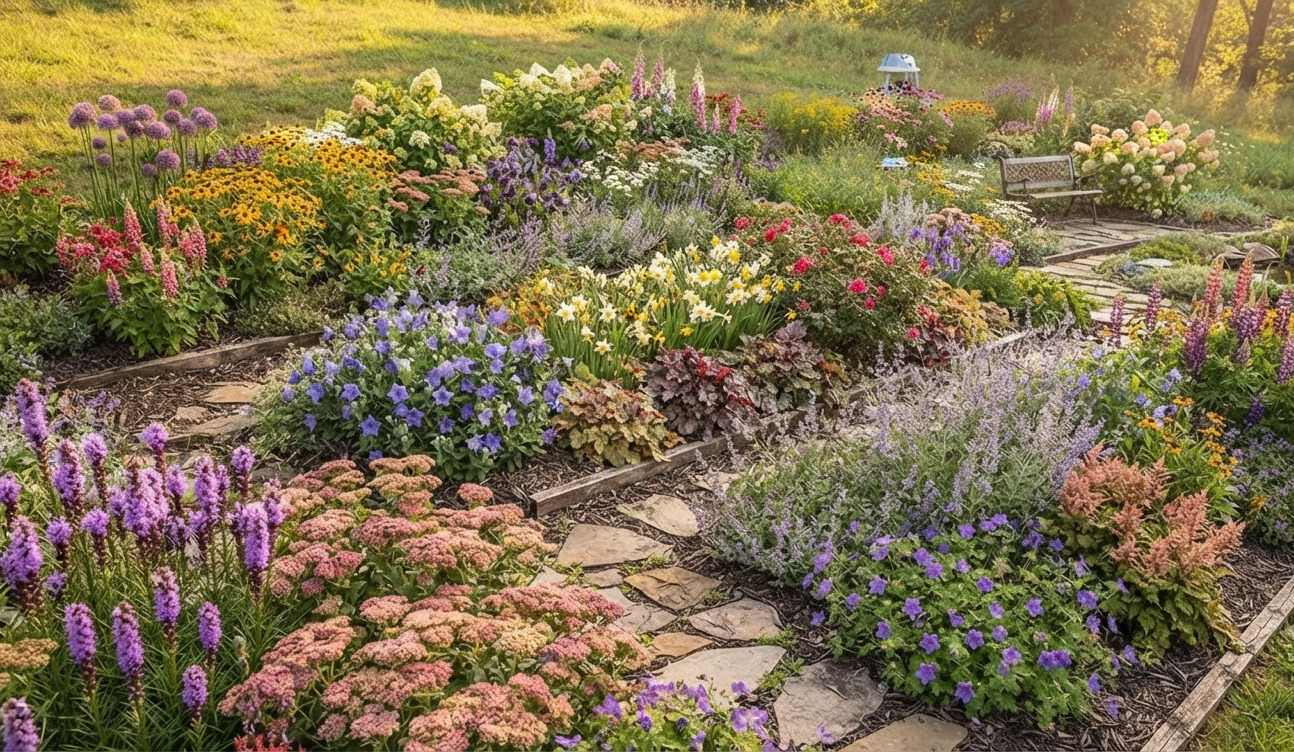
Creating a beautiful outdoor space shouldn’t feel like a second job. By choosing low-maintenance perennial flowers, you can have a colorful, pollinator-friendly garden that grows nicely over time. Start with a few of the flowers mentioned above, and like my neighbor Sarah, you may find that your garden becomes your favorite place to relax at home.
READ: Thanksgiving Crafts for Kids: Fun, Easy, and Memorable Holiday DIYs
Frequently Asked Questions (FAQ)
To help you care for your garden, here are some common questions about looking after these tough plants:
Q: Do low-maintenance perennials really come back every year? A:Perennials are plants that live for more than one year. Unlike annuals, which grow and die in a single season, perennials develop deep roots that let them survive the winter. They come back each year, often growing bigger and more beautiful as time goes on.
Q: When is the best time to plant these flowers? A: Generally, the best times to plant perennials are in the spring (after the last frost) or in the fall (before the first hard frost). These temperate times allow the plants to focus on root development rather than surviving extreme heat or freezing temperatures.
Q: Should I mulch my perennial garden? A: Absolutely. A two-to-three-inch layer of organic mulch helps retain soil moisture, suppresses weeds, and regulates ground temperature, which is essential for keeping your garden truly “low-maintenance.”
Q: What do I do when my perennials finish blooming? A: For many plants like Yarrow, Bee Balm, and Shasta Daisies, cutting off the dead flower heads helps them grow more blooms. For other plants, you can simply enjoy the leaves until they go dormant in late autumn.
Q: Can I mix perennials and annuals? A: It is highly recommended! Think of perennials as the main part of your garden design. Use annuals to quickly add color for the season.
Q: How do I know which perennials are right for my location? A: Always check the USDA Hardiness Zone for your area before buying plants. Choosing plants that are native to or suited for your local climate is the most important step to keep them healthy without needing constant care.
Are you ready to start planting? Which perennials are you most excited to add to your garden this season?