Beyond the Stereotypes: Famous Indigenous and Native Americans Shaping History Today
How Today's Trailblazers Are Quietly Rewriting History and Changing Pop Culture Forever
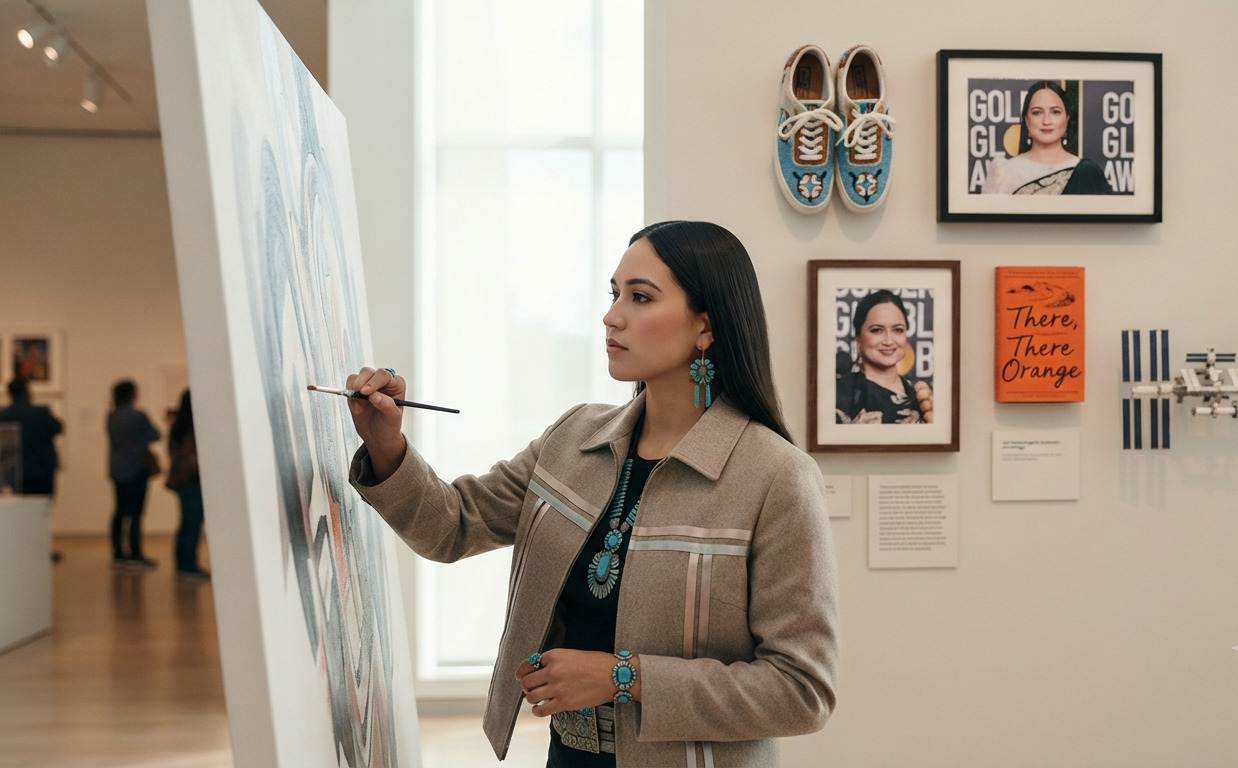
In the United States, there are 574 federally recognized Native American tribes and approximately 400 unrecognized tribes, collectively speaking nearly 200 different Indigenous languages. This remarkable diversity weaves together a rich tapestry of culture, tradition, and perspective.
However, for generations, popular culture has reduced this vibrant diversity to one-dimensional stereotypes, caricatures, and hurtful mascots. Thankfully, a significant cultural transformation is underway. Across various fields—science, politics, culinary arts, sports, and entertainment—prominent Indigenous and Native Americans are breaking down barriers, reclaiming their narratives, and reshaping the global landscape.
A Personal Perspective: Finding Connection Through Storytelling
When I was growing up, my neighbor Maya, who is a member of the Cherokee Nation, often invited me over in late autumn. As the wind rattled the windows, she would tell me stories passed down through her family. These stories were not found in our school textbooks.
Maya didn’t treat history as something from a long time ago. Instead, she explained it as a living part of life. She showed me how the strength of her ancestors continues today in artists, musicians, scientists, and leaders.
When I saw Lily Gladstone speak the Blackfoot language at the Academy Awards, or listened to the deep cultural roots in modern indie and country music, I thought of Maya. These modern figures show that Native culture is not just a thing of the past; it plays an important role in shaping our world today.
Trailblazers in Film, Television, and Entertainment
The entertainment industry has often struggled with a lack of true Indigenous representation. Today, strong actors, directors, and creators are changing this.
+-----------------------------------------------------------------+
|                     ENTERTAINMENT TRAILBLAZERS                  |
+-------------------+---------------------------------------------+
| Lily Gladstone    | First Native woman to win a Golden Globe    |
| Sterlin Harjo     | Co-creator of the hit series Reservation Dogs|
| Wes Studi         | First Native American actor to receive an Oscar|
| Jason Momoa       | Activist, actor, and proud Native Hawaiian  |
+-------------------+---------------------------------------------+
-
Lily Gladstone (Piegan Blackfeet and Nez Perce): Rising to international fame for her riveting performance in Martin Scorsese’s Killers of the Flower Moon, Gladstone made history as the first Native American woman to win a Golden Globe for Best Actress, famously dedicating part of her Oscar acceptance speech to speaking Blackfoot.
-
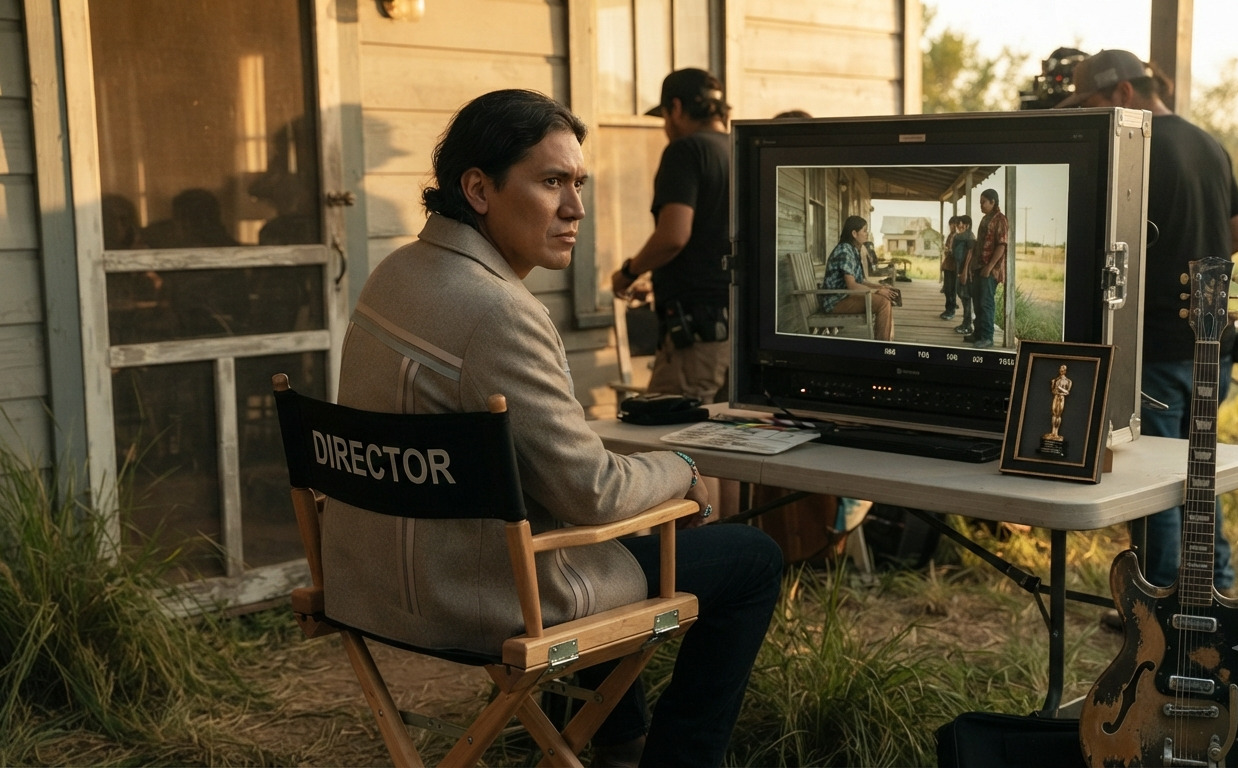
Sterlin Harjo (Seminole and Muscogee): As the visionary director and co-writer behind FX’s groundbreaking comedy-drama Reservation Dogs, Harjo brought authentic Native youth experiences and humor directly into living rooms worldwide.
-
Wes Studi (Cherokee): A legendary fixture in cinema (Dances With Wolves, The Last of the Mohicans), Studi received an Academy Honorary Award in 2019, making him the first Native American actor to receive an Oscar.
-
Jason Momoa (Pawnee and Native Hawaiian): A global superstar who continually uses his massive platform to advocate for Indigenous sovereignty and protect sacred lands, such as leading protests to protect Mauna Kea in Hawaii.
Visionary Artists, Musicians, and Writers
Art is often the truest reflection of a culture’s soul. From foundational rock history to contemporary poetry, Indigenous creators are redefining aesthetic boundaries.
-
Link Wray (Shawnee): Revered as the inventor of the power chord and “the original punk,” Wray’s 1958 instrumental track “Rumble” revolutionized rock and roll guitar distortion and earned him a 2023 induction into the Rock and Roll Hall of Fame.
-
Joy Harjo (Muscogee/Creek): An internationally acclaimed author, musician, and playwright who made history in 2019 by being appointed the first-ever Native American U.S. Poet Laureate.
-
Tommy Orange (Cheyenne, Arapaho): His critically acclaimed debut novel, There There, was a 2019 Pulitzer Prize finalist, capturing the complex, modern urban experiences of Native Americans.
-
Quannah Chasinghorse (Diné/Lakota): A high-fashion model and fierce activist who uses global platforms like the Met Gala to merge contemporary high fashion with traditional Indigenous jewelry, raising awareness for missing and murdered Indigenous women (MMIW) and land sovereignty.
Pioneers in Science, Politics, and Athletics
These leaders are breaking barriers in politics, sports, and other areas, showing that having diverse representation is important in all parts of society.
-
Deb Haaland (Laguna Pueblo): Made history by becoming the first Native American to serve as a U.S. Cabinet Secretary (Secretary of the Interior), where she champions environmental justice and climate protection.
-
Sharice Davids (Ho-Chunk): One of the first Native American women—and the first openly LGBTQ+ Native woman—ever elected to the United States Congress.
-
John Herrington (Chickasaw): In 2002, Herrington became the first enrolled member of a Native American tribe to fly in space, carrying the Chickasaw Nation flag, arrowheads, and eagle feathers aboard the International Space Station.
-
Creed Humphrey (Potawatomi Nation): The star center for the Kansas City Chiefs, Humphrey is a Super Bowl champion who actively uses his platform in professional sports to inspire the next generation of Native youth.
Continuing the Legacy Every Day
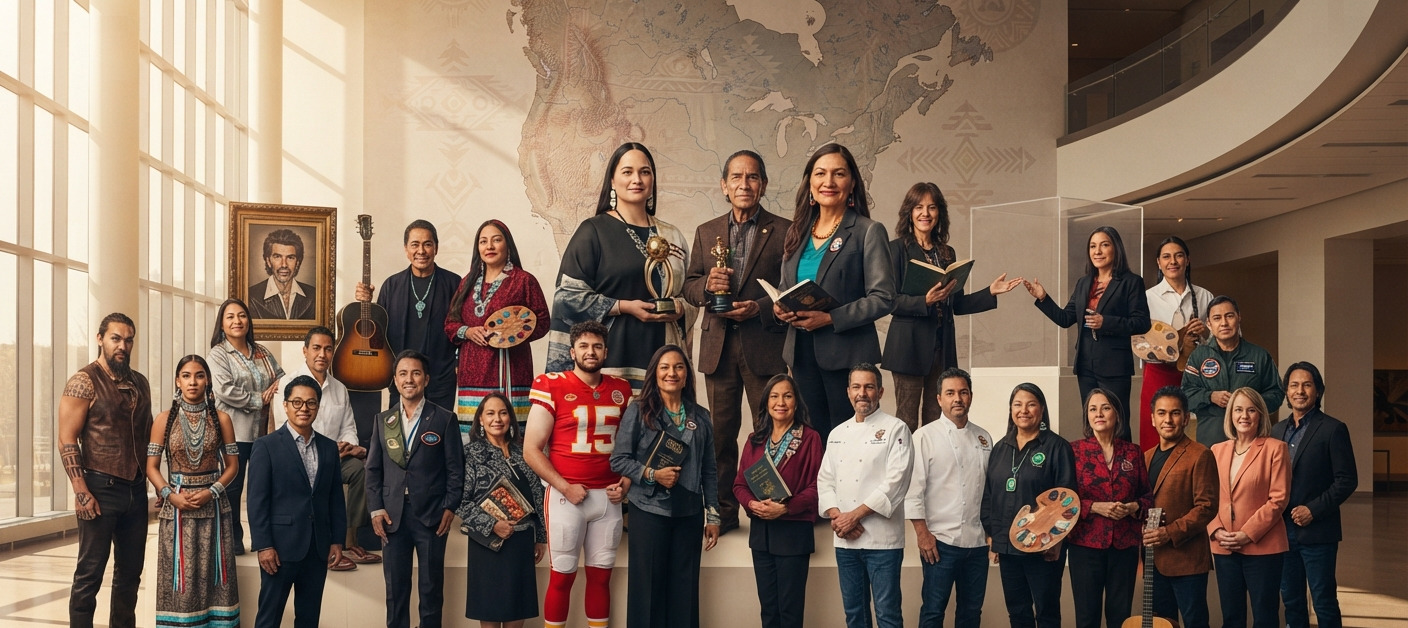
Celebrating Indigenous and Native Americans should not be limited to Native American Heritage Month. It is important to honor their resilience, creativity, and dedication to preserving their cultures all year long. By supporting Indigenous business owners, artists, and creators, we recognize a rich heritage that continues to improve our future.
READ: Beyond the Box of Chocolates: Timeless Valentine’s Day Poems to Make Your Sweetheart Swoon
Frequently Asked Questions
Why is positive Native American representation in media important?
For many years, popular culture has used simple stereotypes and ignored the true history of Indigenous and Native Americans. When famous Indigenous and Native Americans are accurately and diversely represented, it empowers younger generations. This helps correct historical misunderstandings and shows the vibrant, living cultures of the 574+ federally recognized tribes in the United States.
Who was the first Native American to win an Oscar?
Legendary actor Wes Studi (Dances With Wolves, The Last of the Mohicans) was awarded an Academy Honorary Award in 2019, making him the first Native American actor to receive an Oscar. Additionally, Lily Gladstone made history as the first Native American woman to be nominated for Best Actress and win a Golden Globe for Killers of the Flower Moon.
Who is the first Native American to serve in a U.S. Presidential Cabinet?
Deb Haaland, from the Laguna Pueblo, made history when she became the U.S. Secretary of the Interior. She is the first Native American to hold a cabinet position in the United States.
What are some ways to support Indigenous creators and communities year-round?
You can support Indigenous communities by reading literature by Native authors (like Tommy Orange or Joy Harjo), watching films and television series created by Indigenous directors (such as Sterlin Harjo’s Reservation Dogs), purchasing authentic art directly from Native artists, and supporting environmental and sovereignty organizations led by Indigenous peoples.