
The Ultimate Guide to At-Home Hair Treatments: Save Money, Skip the Salon, and Revive Your Locks
Ditch expensive salon visits and revive your damaged locks, dry scalp, and thinning hair using powerful, budget-friendly remedies you already have in your kitchen
Imagine it’s a rainy Tuesday morning, and you’re looking in the bathroom mirror. You lift a strand of your hair and notice the dull, frizzy split ends. You search online for a salon booking app, only to find that a basic treatment and trim costs a lot. Does this sound familiar?
We’ve all been there. Life gets busy, and styling tools damage our hair. But you don’t need to spend a lot of money or waste hours at a fancy salon to fix your hair. Many effective at-home hair treatments are already in your refrigerator or pantry.
Whether you’re dealing with thinning hair, an itchy scalp, or faded color, this guide has what you need. We’ve listed common hair problems and matched them with easy DIY solutions. For those days when you’re too busy to make your own, we also included quick store-bought options.
1. The Problem: Thinning Hair
The Fix: If you have fine baby hair, your biggest worry might be hiding your scalp or dealing with breakage. To address these concerns, use a protein-rich treatment that can add volume to your hair.
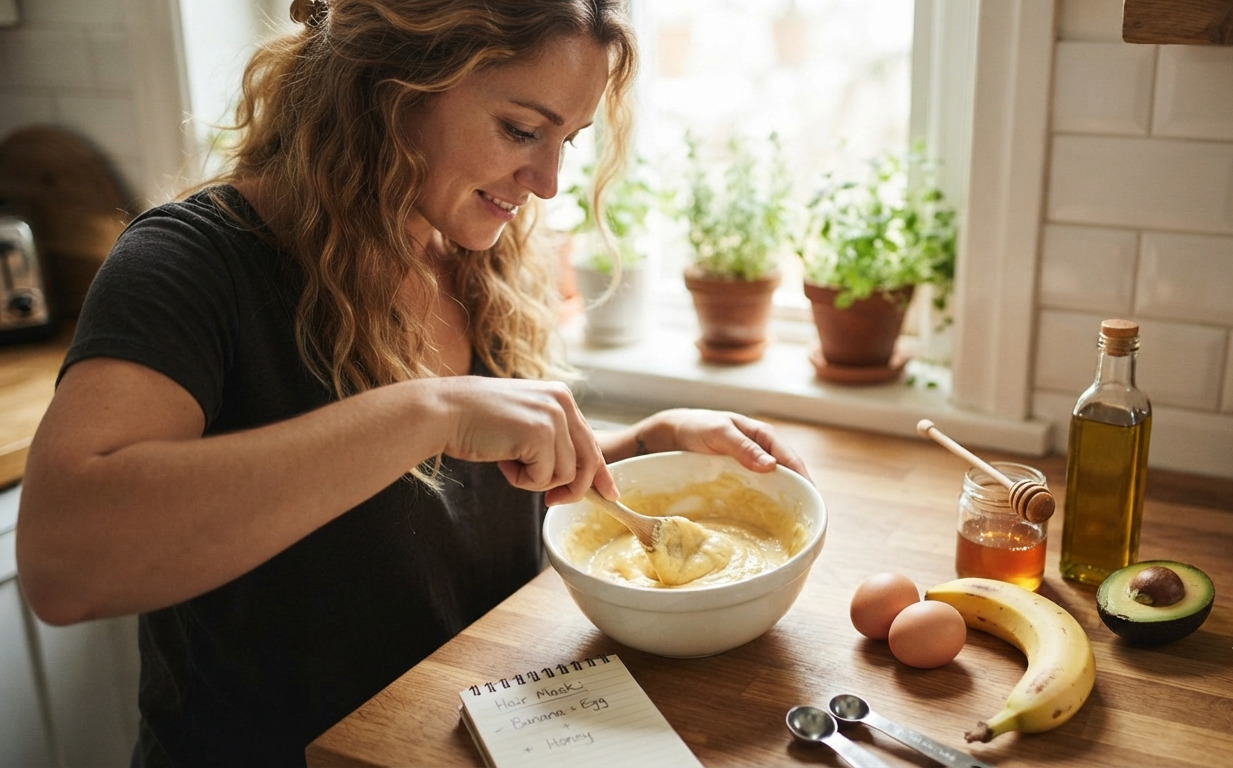
Audrey Davis-Sivasothy, who wrote Hair Care Rehab: The Ultimate Hair Repair and Reconditioning Manual, suggests making a “banana protein smoothie.” Bananas and eggs contain amino acids that help improve hair elasticity, strengthen strands, and add thickness.
-
How to use it: Mix two egg yolks, two ripe bananas, two to three tablespoons of honey, half a cup of conditioner, and two tablespoons of olive oil until smooth. Apply the mixture to your hair and leave it on for 20 to 30 minutes. Rinse it out with cool water. “You will see results right away,” says Davis-Sivasothy, “but remember, it will only last until your next shampoo.”
-
Store-bought alternative: Try the drugstore favorite, Pureology Strength Cure Strengthening Shampoo.
2. The Problem: Brittle Hair
The Fix: Strengthen weak, brittle strands before they turn into severe breakage and dullness. Egg yolks are a fast, effective fix, notes Sadah Saltzman, a hairstylist at Salon AKS in New York City. They help intensely nourish and fortify hair follicles.
-
How to use it: Mix a little lemon juice into the yolks to tone down the egg smell. Apply the mixture evenly from roots to ends, letting it sit for 30 minutes to an hour to deeply penetrate the hair shaft.
-
Store-bought alternative: Prefer to keep your eggs in the fridge for breakfast? Try the Too Cool for School Egg Remedy Hair Pack.
3. The Problem: Dry, Damaged Tresses
The Fix: Moisturize, moisturize, moisturize! Without proper hydration, you’re only a heartbeat away from split ends and stubborn frizz. If your regular conditioner isn’t cutting it, opt for an intensive overnight treatment.
Kyle White, a lead colorist, swears by the reparative properties of coconut oil: “It’s the heaviest of oils and can penetrate two layers of the hair shaft.”
-
How to use it: Warm a tablespoon of coconut oil in the microwave, massage it into damp hair, and sleep on it. Wear a shower cap and lay a towel over your pillow to protect your linens. Shampoo it out in the morning. (Note: If you have very fine hair, opt for lighter oils like olive or avocado, as coconut oil can weigh your strands down.)
-
Store-bought alternative: Use an oil-based conditioner like Crème of Nature Argan Oil Intensive Conditioning Treatment.

4. The Problem: Itchy Scalp & Dandruff
The Fix: An itchy scalp can stem from anything from seasonal dryness to mild fungal conditions. To soothe and hydrate, reach for tea tree oil—an effective remedy praised for its natural antifungal properties. For dandruff specifically, Davis-Sivasothy suggests a ginger root scalp spritzer to reduce inflammation and slow down rapid skin cell turnover.
-
How to use it for itchiness: Drip three drops of tea tree oil onto a cotton swab and dab directly onto the scalp. Alternatively, break open a Vitamin E capsule and rub the oil onto itchy areas overnight, rinsing in the morning.
-
How to use it for dandruff: Finely grate half a ginger root into two cups of water and boil down to one cup. Add a tablespoon of lemon juice and olive oil, mist the brew directly onto your scalp, let dry, and shampoo out.
-
Store-bought alternative: Reach for Derma E Scalp Relief Conditioner or The Body Shop Ginger Scalp Care Shampoo.
5. The Problem: Messy Waves or Curls
The Fix: Define rather than fight your hair’s natural texture with a custom curl enhancer made from humectants like honey and syrup, which naturally attract and lock in moisture.
-
How to use it: Mix a half-cup of molasses or maple syrup, 1/4 cup of olive oil, four tablespoons of honey, two bananas, half a cup of water, four tablespoons of lemon juice, and two tablespoons of all-purpose flour (adjust to achieve your preferred thickness). Warm the mixture over the stovetop, remove lumps, and apply to four sectioned parts of your hair. Cover with a shower cap for 45 minutes, then rinse thoroughly.
-
Store-bought alternative: Feeling pressed for time? Grab Tigi Catwalk Curlesque Curls Rock Amplifier.
6. The Problem: Dullness & Frizzy Flyaways
The Fix: Think of your hair’s outer layer—the cuticles—like shingles on a roof; they must lie flat for maximum shine. Friction, humidity, and product buildup ruffle these cuticles, causing dullness and frizz.
-
How to use it: Mix one tablespoon of apple cider vinegar with a half-cup of water. Pour this rinse over your damp hair. Comb it through and let it sit for five minutes. Then, rinse your hair with cool water. If you have frizz, use a small amount of castor oil. It helps protect your hair from humidity because it has omega-9 fatty acids.
-
Store-bought alternative: To avoid the smell of vinegar, use Paul Mitchell Shampoo Three for a deep clean or Phyto Phytolisse Finishing Serum to reduce frizz.
7. The Problem: Excessive Shedding & Flat Hair
The Fix: If your hair feels lifeless or you’re noticing extra strands in your brush, you need a treatment that targets both the scalp and the hair follicles. Celebrity stylist Paul Cucinello recommends a mayonnaise-based mask to heal the scalp, while master colorist Stephanie Brown suggests an oatmeal and almond oil mask to pump up flat hair with bounce and volume.
-
How to use the anti-shedding mask: Mix three tablespoons of mayonnaise, one teaspoon of honey, and three drops each of rosemary and lavender essential oils. Apply the mixture to clean, damp hair and scalp. Cover your hair with a shower cap and let it sit for up to an hour before rinsing it out.
-
Store-bought alternative: Try Dabur Vatika Naturals Hair Mayonnaise or the Aveeno Intense Hydration Almond Oil Blend Hair Mask.
Final Thoughts
Taking care of your hair doesn’t have to cost a lot. You can use simple treatments from your kitchen to meet your hair’s specific needs and save money at the same time.
READ: Tummy Control Swimsuits According to Style Experts: The Ultimate Guide to Feeling Confident All Summer Long
(FAQs)
1. How often should I use at-home hair treatments?
For DIY hair masks and oil treatments, use them once a week. Using them too often or applying heavy protein treatments can make your hair brittle and stiff. Pay attention to what your hair needs and adjust your routine accordingly.
2. Can I store leftover DIY hair masks for later use?
It is not a good idea to store leftover natural hair masks. Homemade remedies do not have chemical preservatives, so fresh ingredients like eggs, bananas, and milk can quickly grow bacteria. Always prepare a fresh batch right before your treatment.
3. Will coconut oil make my hair greasy?
Coconut oil is deeply penetrating and heavy, which makes it fantastic for thick, dry, or damaged hair. However, if you have baby-fine or thin hair, coconut oil can weigh your strands down and leave them looking greasy. If your hair is fine, opt for lighter oils like olive, almond, or avocado oil instead.
4. Do natural hair treatments really work as well as salon products?
Kitchen ingredients like honey, apple cider vinegar, and eggs can help with temporary hydration, reduce frizz, and add shine. These ingredients provide quick results but only last until your next wash. For serious hair damage, chemical treatments, or ongoing scalp issues, it’s best to use targeted store-bought products and seek professional advice.
Which of these DIY remedies will you try first? Share your choice in the comments below!