
The Magic of Brain Teasers: Why Clever Riddles for Smart Kids Are More Than Just Games
45+ Brain-Boosting Challenges to Spark Curiosity and Build Lifelong Problem-Solving Skills
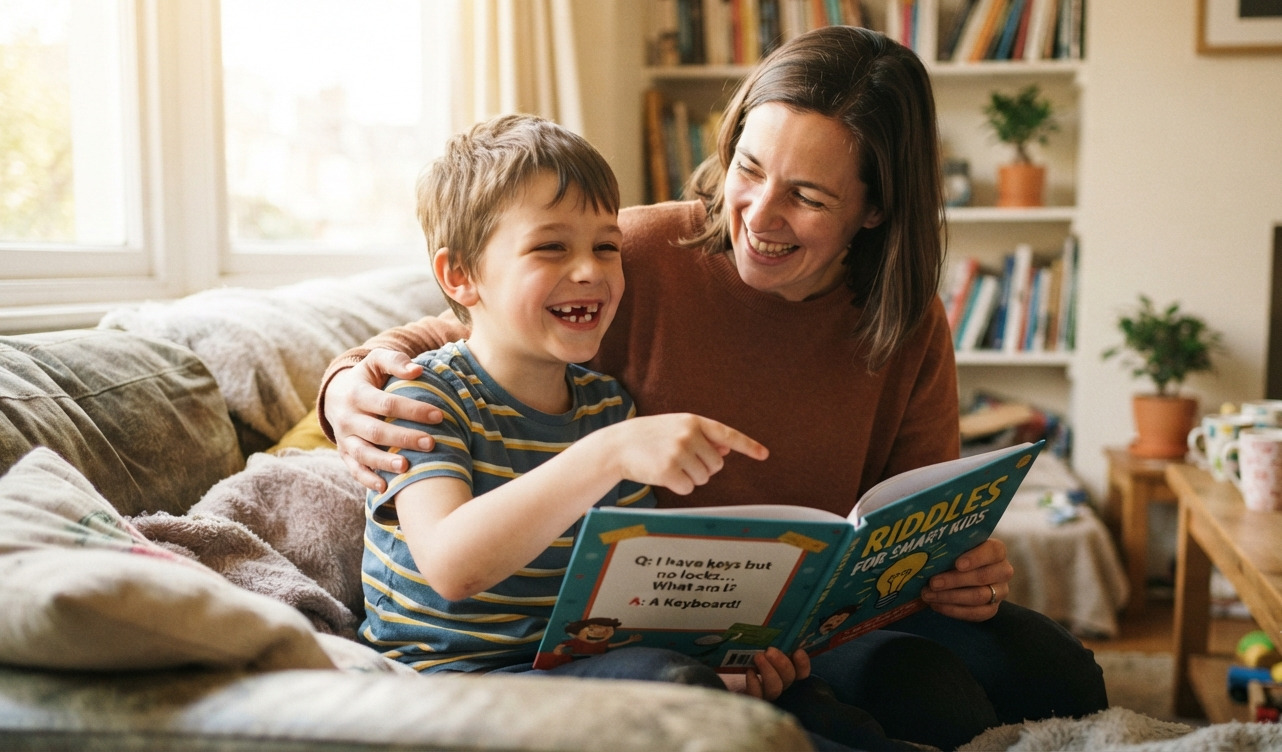
Imagine it’s a rainy Tuesday afternoon. The Wi-Fi is acting up, the kids are getting restless, and you’ve already played all the board games. You need a moment of quiet or a way to connect with them.
I remember a day like this with my seven-year-old nephew, Leo. He was bored and fidgeting with a coaster when I challenged him: “I have keys but no locks. I have space but no room. You can enter but you can’t leave. What am I?”
He paused, looked around, and then gave me a cheeky grin. “Is it a house with no doors?” he guessed. When I told him the answer was a keyboard, his face lit up. He was excited not just because he got it wrong, but because he realized he needed to think differently to solve it. We spent the next hour sharing brain teasers until the sun returned. It wasn’t just a way to pass the time; it helped us connect.
This shows the power of clever riddles for kids. They are not just games—they help sharpen young minds while having fun.
Why Riddles Are Brain-Boosting Gold
Riddles are fun and also effective learning tools. Research shows that solving lateral thinking puzzles helps children build important skills.
-
Critical Thinking & Logic: Riddles help kids think in new ways and understand information better. They encourage children to look beyond the obvious and explore different perspectives.
-
Vocabulary & Language Arts: Through puns, metaphors, and wordplay, children encounter language in a playful, low-pressure environment.
-
Growth Mindset: When a child hits a wall with a “tricky” riddle, they practice “productive struggle”—the art of sticking with a problem until it clicks.
-
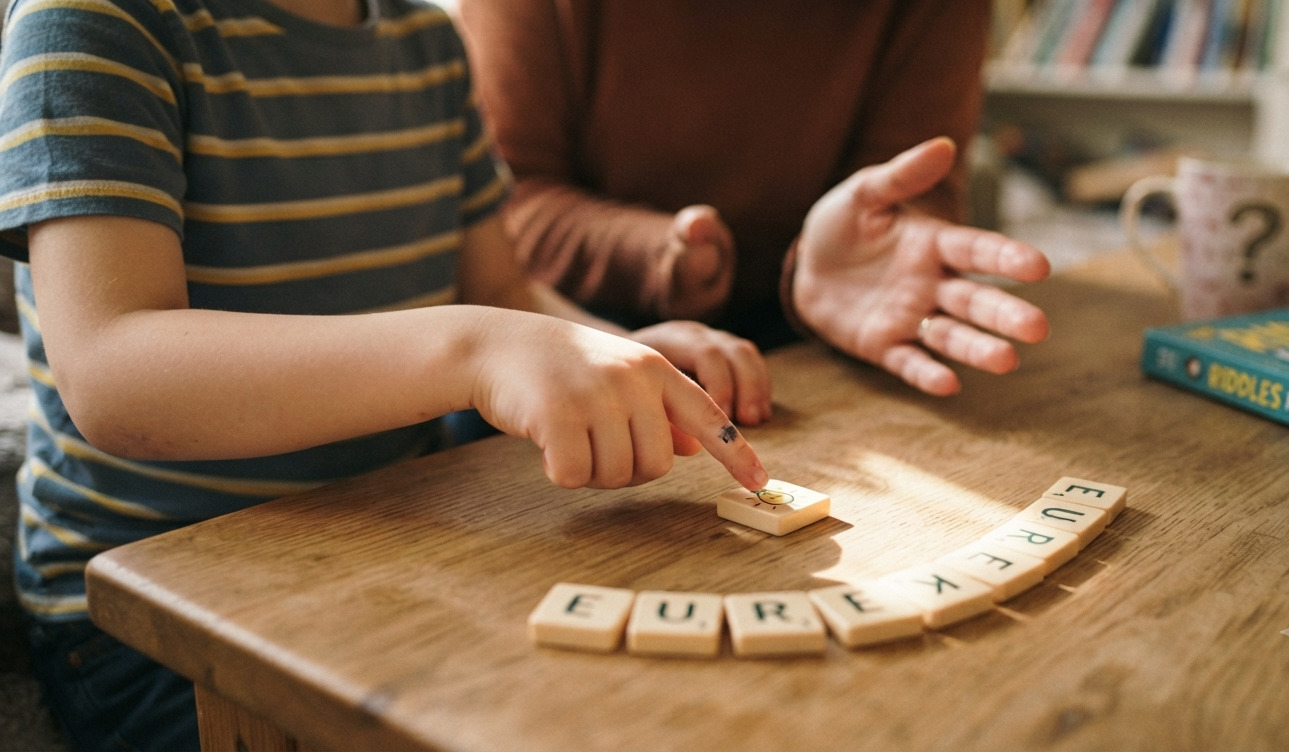
Social Bonding: Sharing a laugh or a “Eureka!” moment fosters deep connections between parents and children.
The Ultimate Collection of Clever Riddles for Smart Kids
Whether you are looking to challenge their logic or just have a good laugh, these riddles are perfect for curious young minds.
New Brain Teasers for 2026
-
Q: If you’ve got me, you want to share me; if you share me, you haven’t kept me. What am I?
-
A: A secret.
-
-
Q: You walk into a dark room with a candle, a lamp, and a fireplace. What do you light first?
-
A: A match.
-
-
Q: What has many keys but can’t open a single lock?
-
A: A piano.
-
-
Q: What breaks yet never falls, and what falls yet never breaks?
-
A: Day and night.
-
-
Q: What gets bigger when you take more away from it?
-
A: A hole.
-
-
Q: What is yours, but other people use it more than you do?
-
A: Your name.
-
-
Q: You see a boat filled with people. It has not sunk, but when you look again you don’t see one single person on the boat. Why?
-
A: All the people were married.
-
-
Q: What has one eye, but can’t see?
-
A: A needle.
-
-
Q: What runs all around the backyard but never moves?
-
A: A fence.
-
-
Q: What goes up but never comes back down?
-
A: Your age.
-
-
Q: What can you break, even if you never pick it up or touch it?
-
A: A promise.
-
Tricky Riddles to Get Them Thinking
-
Q: I speak without a mouth and hear without ears. What am I?
-
A: An echo.
-
-
Q: What is always in front of you but can never be seen?
-
A: The future.
-
-
Q: You’re running a race and pass the person in second place. What place are you in now?
-
A: Second place.
-
-
Q: What starts with a P, ends with an E, and has thousands of letters?
-
A: A post office.
-
-
Q: I have no wings, but I can fly. I have no eyes, but I can cry. What am I?
-
A: A cloud.
-
-
Q: What can you catch but not throw?
-
A: A cold.
-
-
Q: If you have a basket that is one foot deep and one foot wide, how many apples can you fit in the empty basket?
-
A: Only one—after that, it isn’t empty anymore!
-
-
Q: I have cities, but no houses. I have forests, but no trees. I have water, but no fish. What am I?
-
A: A map.
-
-
Q: What has a neck but no head?
-
A: A bottle.
-
-
Q: Which question can you never answer “yes” to?
-
A: “Are you asleep?”
-
-
Q: I’m tall when I’m young, and I’m short when I’m old. What am I?
-
A: A candle.
-
Animal & Food Fun
-
Q: What do you call a bear with no teeth?
-
A: A gummy bear!
-
-
Q: Why did the citrus tree go to the hospital?
-
A: Lemon-aid.
-
-
Q: What has a thousand needles but cannot sew?
-
A: A porcupine.
-
-
Q: What kind of dog has no tail?
-
A: A hot dog.
-
-
Q: Why are teddy bears never hungry?
-
A: Because they are always stuffed!
-
-
Q: What fruit can you never cheer up?
-
A: A blueberry.
-
-
Q: I have arms that are longer than my legs and I can learn sign language. Who am I?
-
A: A gorilla.
-
-
Q: What has a head but no eyes, nose, or mouth?
-
A: Lettuce.
-
-
Q: What’s bright orange with green on top and sounds like a parrot?
-
A: A carrot!
-
-
Q: What kind of cheese is made backwards?
-
A: Edam.
-
-
Q: What has a thousand needles but cannot sew?
-
A: A porcupine.
-
-
Q: Why was the citrus tree sent to the hospital?
-
A: For some lemon-aid!
-
-
Q: I’m red and small, and I have a heart of stone. What am I?
-
A: A cherry.
-
Math Riddles for Young Geniuses
-
Q: If there are seven oranges and you take three away, how many oranges do you have?
-
A: Three, since that’s how many you took.
-
-
Q: Ms. Smith has four daughters. Each daughter has a brother. How many kids are there in total?
-
A: Five: There are four daughters and one son.
-
-
Q: If an electric train is traveling south, which way is the smoke going?
-
A: There’s no smoke on an electric train.
-
-
Q: Why was 6 afraid of 7?
-
A: Because 7, 8 (ate), 9!
-
-
Q: How many seconds are in a year?
-
A: Twelve: January 2nd, February 2nd, March 2nd… and so on!
-
-
Q: Oliver was 10 the day before yesterday. Next year he’ll turn 13. How is this possible?
-
A: His birthday is December 31st. On December 30th he was 10, on December 31st he turned 11, and “today” (January 1st) he is 11. He will turn 12 this year, and 13 next year.
-
-
Q: What has to be broken before you can use it?
-
A: An egg.
-
-
Q: If two’s company, and three’s a crowd, what are four and five?
-
A: Nine.
-
-
Q: A word I know, six letters it contains, remove one letter and 12 remains. What is it?
-
A: Dozens.
-
-
Q: What month of the year has 28 days?
-
A: All of them!
-
Tips for Success: How to Be a Great “Riddler”
If you want to keep the momentum going, follow these simple strategies:
-
Keep it Playful: The goal is connection, not a test. If they get frustrated, offer a gentle hint instead of the answer.
-
Tailor the Difficulty: Combine easy and funny riddles with challenging brain-teasers to keep people motivated.
-
Make it a Ritual: Riddles are great for car rides, waiting in lines, or at dinner. You can make them a “riddle of the day” to help create a fun habit.
READ: Low-Maintenance Perennial Flowers: A Beginner’s Guide to a Stunning, Stress-Free Garden
Frequently Asked Questions (FAQ)
Are riddles actually good for kids’ development?
Riddles help children think in new ways. They teach kids to look at problems from different angles. Research shows that solving riddles can improve vocabulary, logic, and observation skills. These skills build a strong foundation for success in school.
What is the best age to start telling riddles?
You can start as early as age 4 or 5 with very simple, object-based riddles (like “What has hands but no arms?”). As they get older, you can introduce more complex wordplay and logic-based math riddles.
My child gets frustrated when they can’t solve a riddle. What should I do?
Make it fun, not challenging. If they get stuck, turn it into a game. Instead of giving them the answer, provide a hint that helps them find the right logic, or share a laugh about how tricky the answer is. The goal is to build their confidence, not to test them.
Why do kids like riddles so much?
Riddles help kids feel accomplished. When they solve a riddle, their brain releases dopamine, making them feel smart and capable. Riddles also allow kids to engage with adults as equals, which helps build trust and connection.
By adding Clever Riddles for Smart Kids to your daily routine, you provide more than just answers. You equip them with the tools to think, create, and enjoy exploring the unknown.