
The Surprising True History of Valentine’s Day: Martyrs, Pagans, and Mass-Produced Romance
From Ancient Roman Rituals to Secret Victorian Insults: The Wild, Unttold Evolution of February 14
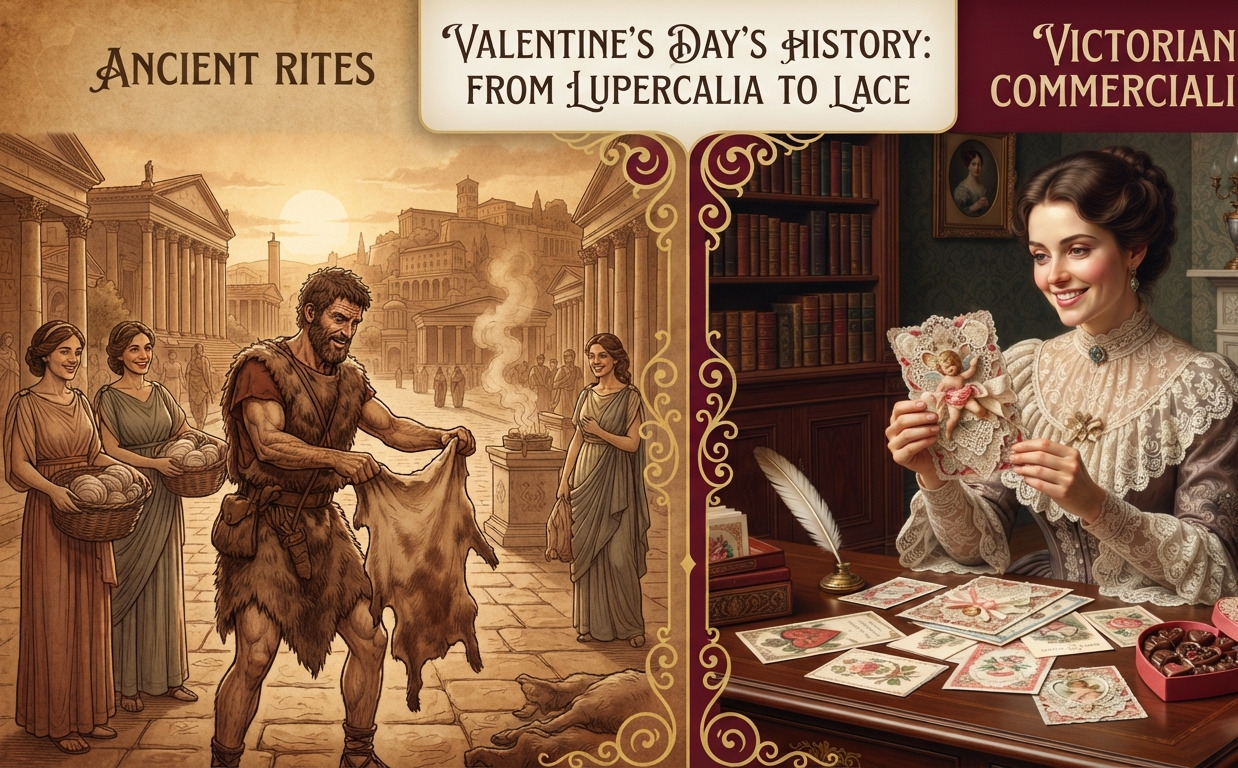
Have you ever seen a heart-shaped box of chocolates or noticed a lot of ads featuring cherubs and wondered how we got to this point?
Valentine’s Day is now a celebration that makes billions of dollars, focusing on love, friendship, and even pets. However, its true history is much more surprising and complex than you might think.
A Quiet Coffee Shop and an Unexpected Discovery
Last February, I sat in a corner booth of a busy local coffee shop, drinking a lukewarm latte. My grandfather was across from me, carefully unfolding a fragile, yellowed piece of paper. It was a love letter from his grandfather, written in 1946 on lined notebook paper and sealed with a plain red sticker. The letter was filled with deep feelings.
As I read the delicate handwriting, I realized that while we often focus on modern Valentine’s Day gifts like jewelry and big flower bouquets, the true meaning of the holiday has always been about connecting with others over time. This thought led me to explore the history of Valentine’s Day. How did a festival in ancient Rome, which involved animal skins, transform into the greeting cards and chocolate hearts we know today? Let’s look into the interesting timeline of Valentine’s Day’s history.
1. St. Valentine Wasn’t Just One Person
Most people know that this holiday is named after a saint, but there are actually two different St. Valentines who were both martyred.
-
St. Valentine of Rome: Legend says he was a priest who defied Emperor Claudius II’s ban on young men marrying (the emperor believed single men made better soldiers). He secretly married couples and later fell in love with his jailer’s daughter, signing a farewell note to her: “From your Valentine.”
-
St. Valentine of Terni: A bishop who also met a tragic end for his faith.
2. It Started as an Ancient Pagan Festival (Lupercalia)
Long before it was G-rated and full of lace, February 14 (or rather, February 15) was tied to Lupercalia—a raucous ancient Roman fertility festival dedicated to Faunus, the god of agriculture. The celebrations involved animal sacrifices and a rather bizarre ritual where priests would gently slap women and crop fields with bloody goat hides, believing it promoted fertility.
3. Geoffrey Chaucer Cemented the Romance
The murky history began to clear up around the fifth century when Pope Gelasius outlawed Lupercalia and established St. Valentine’s Day. However, it wasn’t connected to romance until the Middle Ages. People believed February 14 marked the start of birds’ mating season. The legendary poet Geoffrey Chaucer cemented this in his 1375 poem Parliament of Foules, writing:
“For this was on Seynt Valentynes day, / Whan every foul cometh ther to chese his make.”
4. Cupid’s Roots Go Back to Ancient Greece
Watch out for arrows! The chubby, winged cherub we recognize today actually originated as Eros, the Greek god of love, way back in 700 B.C. Back then, Eros was depicted as a striking, powerful young man who could drive mortals mad with love. The Romans later adopted him as Cupid, shrinking him down into the mischievous toddler with a bow and arrow we know today.
5. The First Valentine Was Sent From a Prison Tower
According to historical archives, the oldest known Valentine’s message dates back to 1415. Charles, the Duke of Orleans, penned a poem to his wife while locked away as a political prisoner in the Tower of London. One memorable line read: “I am already sick of love, My very gentle Valentine.”
6. Esther A. Howland Created Mass-Produced Valentines in the 1840s
While people exchanged handmade notes throughout the 17th century, the commercial boom didn’t hit until the 1840s. Known as the “Mother of the American Valentine,” Esther A. Howland began mass-producing intricate cards featuring real lace, ribbons, and romantic imagery in America.
7. Roses and “Flower Language” Started by Accident
Giving red roses is common today, but it started from a misunderstanding in the 17th century. Lady Montagu, the wife of the British ambassador to Turkey, visited the area and misinterpreted a local custom. She thought that rhyming words represented specific items, mistakenly believing that the flowers had hidden meanings. This misunderstanding spread through Europe and made red roses the main symbol of passionate love.
8. The Dark Legend of St. Valentine’s Execution
While St. Valentine is celebrated as a romantic figure today, his final moments on Earth were grim. According to historical accounts, Emperor Claudius II grew deeply displeased with Valentine—not just for performing secret weddings, but for attempting to convert the emperor to Christianity. Before he was executed around the year 270 A.D., Valentine was reportedly beaten with clubs and stoned, and then finally decapitated outside the Flaminian Gate in Rome.
9. Victorians Invented Secret “Vinegar Valentines”
Not everyone in history viewed February 14 through rose-colored glasses. During the Victorian era, the holiday gave birth to a petty and hilarious counter-tradition known as “Vinegar Valentines.” These were crude, insulting greeting cards sent anonymously to people the sender disliked or wished to reject. They featured harsh caricatures mocking nagging wives, vain dandies, or bad suitors, delivered with unpaid postage so the unsuspecting recipient had to pay the mail carrier to receive their own insult!
10. The Secret Underground Love Notes of World War II
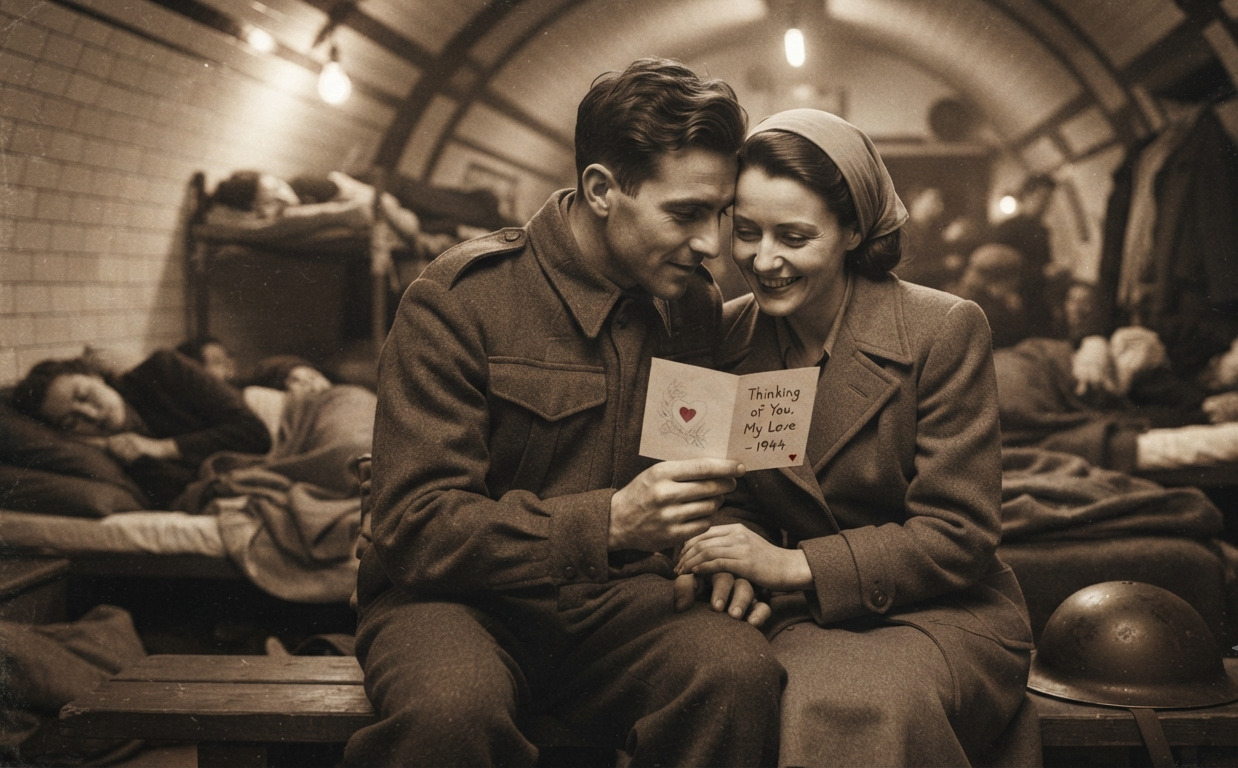
During World War II, Valentine’s Day became very meaningful for families and soldiers who were away from home. Millions of handmade cards and small gifts were sent through the Red Cross and military mail. For soldiers far from home, a simple Valentine letter inside a steel helmet was a crucial connection, showing that love could endure even during tough times of war.
11. The First Commercial Valentine Was Inspired by Lace-Making Machines
Long before Esther Howland popularized cards in America, British stationers began printing rudimentary Valentine’s books containing pre-written poems in the late 18th century. However, the delicate, lacy aesthetic we associate with vintage valentines didn’t take off until manufacturers adapted jacquard weaving and paper-embossing machinery from the textile industry. This allowed factories to stamp intricate, lace-like patterns directly onto heavy paper stock, revolutionizing the greeting card market.
12. The Accidental Invention of the Secret Admirer
The idea of an anonymous admirer leaving a note signed “Guess Who?” goes back to 18th-century folklore. In rural England and parts of Wales, young people took part in a tradition on the night before St. Valentine’s Day. They would pin bay leaves to the corners of their pillows and sprinkle them with rosewater. Legend said they would dream of their future spouse. This sparked a fun practice of passing secret notes among schoolmates and neighbors, trying to guess who their secret admirer was.
Modern Quirks and Fun Facts About Valentine’s Day
As the centuries rolled on, the holiday evolved into a massive cultural and commercial powerhouse:
-
Massive Spending: Americans spend roughly $26 billion on Valentine’s Day gifts annually, with the average person spending close to $193.
-
Greeting Card Giants: Hallmark notes that roughly 145 million Valentine cards are sent every year, making it the second-largest card-sending holiday right behind Christmas. Teachers receive the most cards, followed by children, mothers, and spouses.
-
The Evolution of Conversation Hearts: Those chalky candy hearts originally started as throat lozenges. In the mid-19th century, Boston pharmacist Oliver Chase created a machine to make these medicinal lozenges before changing his focus to candy. Today, Spangler Candy produces millions of them each year, featuring new phrases like “WAY 2 GO” and “HIGH FIVE.”
-
Pet Love is Real: It’s not just humans getting spoiled—millions of households buy special Valentine’s toys and treats for their dogs and cats, generating hundreds of millions of dollars in pet spending.
-
Global Celebrations: In Japan, it is customary for women to gift chocolates to men on February 14, while men return the favor a month later on “White Day” (March 14).
Final Thoughts: Why Valentine’s Day Still Matters
Valentine’s Day is a time for showing love and affection. You might spend it giving gifts, writing a heartfelt card to your partner, celebrating with friends on Galentine’s Day, or treating your pet to a new toy. The history of Valentine’s Day shows that people have always had a strong desire to express their feelings for others.
Next time you enjoy chocolates or read a sweet note, remember the ancient priests, medieval poets, and imprisoned dukes who helped shape this special day.