
Finding Jobs for Students in USA: The Ultimate Guide for International Students
Essential Rules, Real Salaries, and Smart Strategies Every Foreign Student Needs to Know
Packing your bags to study in the United States is a significant step. You’ve likely spent months on university admissions, visa interviews, and booking flights. After the excitement fades, you may wonder: how will I manage my expenses there?
Living costs in the U.S.—including textbooks, groceries, transportation, and rent—can add up quickly. That’s why it’s important to find a reliable source of income for peace of mind.
If you’re looking for student jobs in the U.S., understanding the rules, pay rates, and available opportunities can seem daunting. This guide provides everything you need to know—from visa rules and part-time pay to the best online and in-person jobs—so you can start earning without jeopardizing your student status.
A Quick Real-Life Story: Kofi’s First Semester
When Kofi arrived in Ohio for his master’s degree, he thought finding a job would be as easy as asking for an application at a campus coffee shop. However, by his third week, his budget was running low. He applied to many off-campus jobs online but received no responses or, worse, scam emails asking for payment.
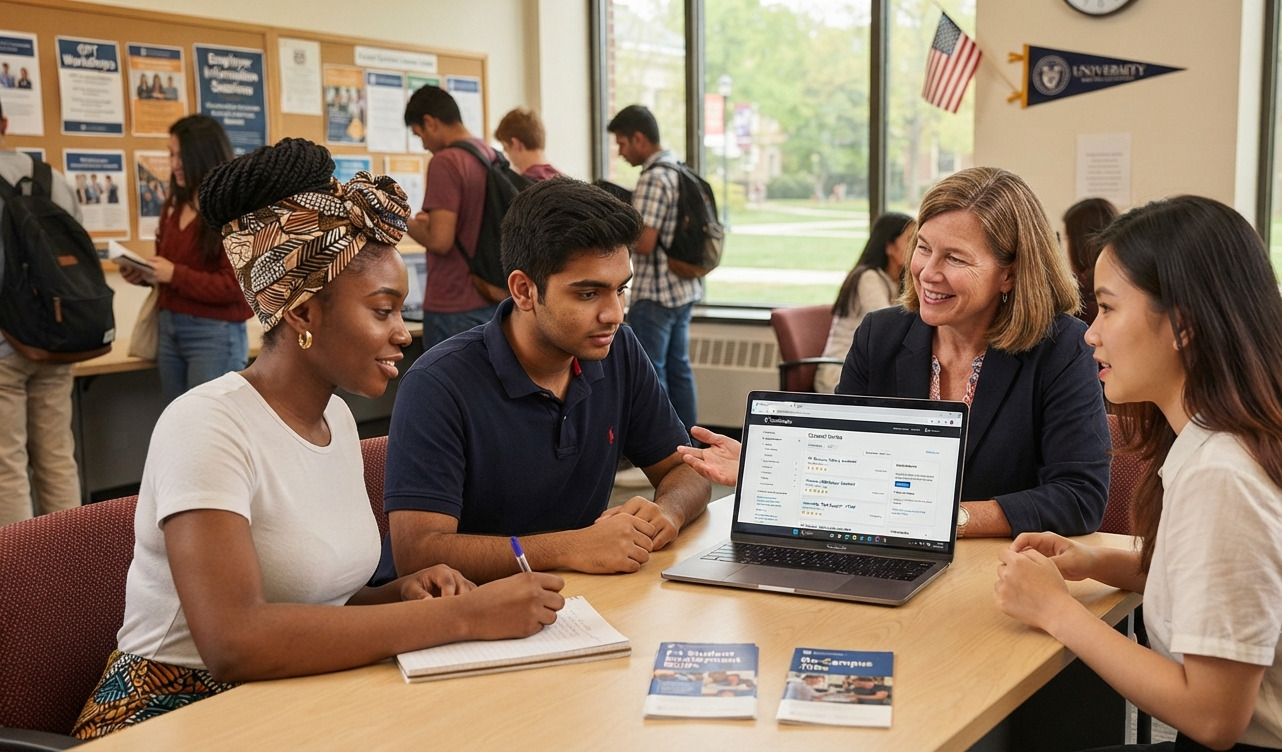
Feeling stressed after long lectures, Kofi met with an international student advisor. The advisor smiled and handed him a brochure. “Kofi, you’re looking for jobs in the wrong places. As an F-1 student, your best resource is your campus, and you should understand the USCIS rules.”
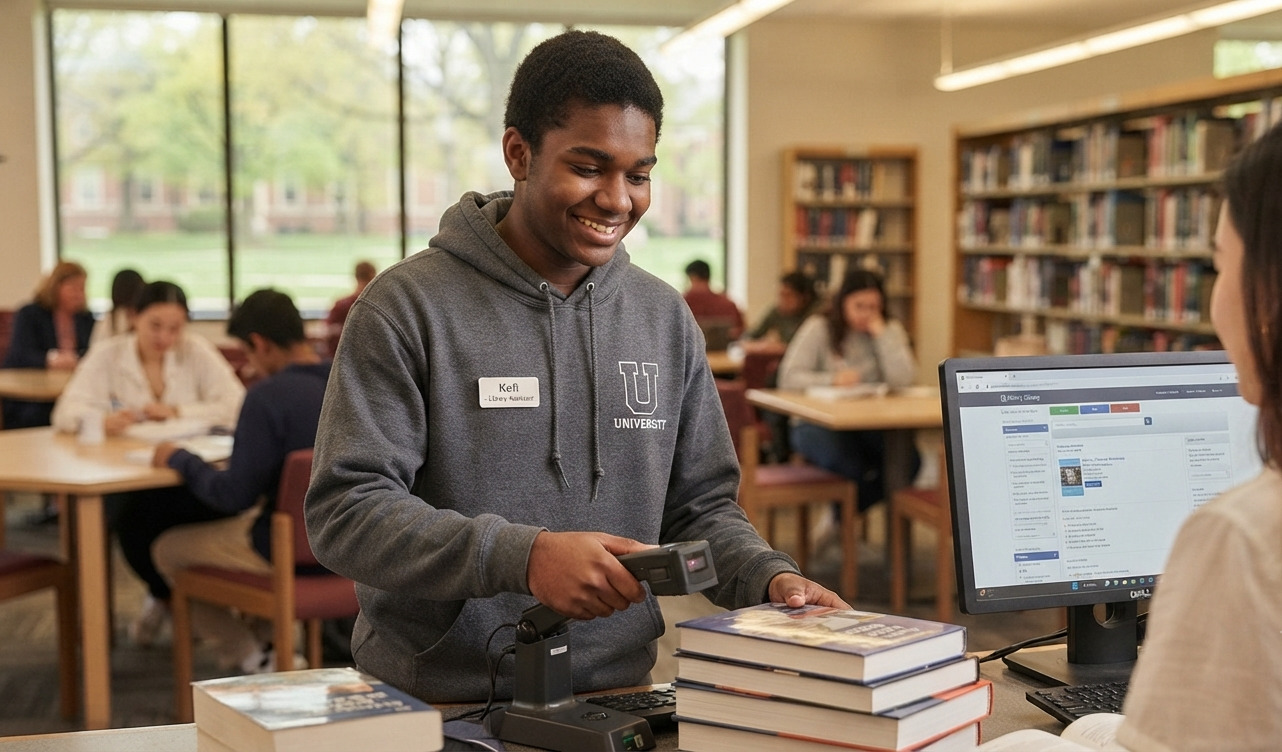
Kofi changed his approach. He applied for a student ambassador role on campus, began working 15 hours a week at the library, and took on freelance writing jobs on weekends. Within a month, he had a regular routine that covered his grocery bills and allowed time for studying. His key lesson? Knowing the rules and focusing on the right jobs can make a big difference.
Understanding the Rules: Jobs for Students in USA for Foreigners
Before applying, it’s important to know what the U.S. government allows international students on an F-1 visa to do.
-
On-Campus Employment: During your first academic year, you can usually work only on campus. Jobs available include positions at the library, bookstore, cafeteria, or administrative offices. While classes are in session, you can work up to 20 hours a week. You can work full-time during official school breaks.
-
Off-Campus Employment (After Year 1): After completing your first academic year, you can explore options like Curricular Practical Training (CPT) or Optional Practical Training (OPT), provided the work is directly related to your major of study.
-
Severe Economic Hardship: In rare cases of unforeseen financial changes, you can apply for special permission to work off-campus through USCIS.
Part-Time Jobs in USA for Students: Salary Expectations
Knowing what to expect financially helps you budget effectively. Wage rates in the U.S. vary depending on the state, city, and specific role.
-
Minimum Wage: Federal minimum wage sits at $7.25 per hour, but many states (like California, New York, and Washington) have higher state-mandated minimums ranging from $14 to over $16 per hour.
-
On-Campus Pay: Most university student jobs pay between $12 and $18 per hour, depending on the complexity of the role and local living costs.
-
Average Monthly Earnings: Working the permitted 20 hours per week at an average of $15 per hour yields roughly $1,200 per month before taxes.
Highest Paying Part-Time Jobs in USA for International Students
If you want to maximize your hourly earnings while keeping your workload manageable, certain roles stand out for their competitive compensation:
-
Campus Tech Support / IT Assistant: Universities rely heavily on student tech staff to troubleshoot network issues, repair hardware, and assist faculty. These roles often pay upwards of $18–$25 per hour if you have coding or IT troubleshooting skills.
-
Graduate Teaching Assistant (TA) or Research Assistant (RA): For graduate students, becoming a TA or RA is one of the most prestigious on-campus options. Beyond hourly pay, these roles frequently include partial or full tuition waivers.
-
Freelance Content Creator or Graphic Designer: Working remotely on university marketing campaigns or managing social media channels for student organizations offers flexibility and solid pay rates ($16–$22 per hour).
-
Campus Tour Guide: Engaging, outgoing students who know the campus inside out can earn great hourly rates while improving their public speaking and networking skills.
Online Jobs for International Students in USA
The digital economy offers great opportunities for flexible income. A part-time job online in the USA lets you set your own hours around a busy lecture schedule.
-
Freelance Writing and Copywriting: If you have a knack for structuring articles, blogging, or crafting marketing copy, platforms like Upwork and Fiverr allow you to connect with global clients.
-
Online Tutoring: Teaching subjects you excel at—such as mathematics, sciences, or English as a second language (ESL)—to younger students online can be extremely lucrative, with rates ranging from $20 to $40 per hour.
-
Data Annotation and AI Training: Companies frequently hire remote contractors to review, label, and format data for machine learning models. These flexible micro-tasks fit easily between classes.
Important Reminder: If you are an international student living in the U.S. on an F-1 visa, you cannot do freelance work off-campus without permission, even if it’s online. Always check with your Designated School Official (DSO) before taking on freelance jobs to make sure you stay within visa rules.
Here are some notable U.S. companies and tech giants that have structured programs for recruiting students, support international students, and offer pathways for Curricular Practical Training (CPT) or Optional Practical Training (OPT):
1. Major Tech and E-Commerce Giants
These companies hire thousands of international students annually for tech, business, data, and operational roles, and they have well-established legal teams to handle visa sponsorships (OPT/H-1B).
-
Amazon & Amazon Web Services (AWS): One of the largest employers of international graduates in the U.S. They routinely hire students for software engineering, product management, logistics, and data science roles, often providing structural visa support.
-
Google / Alphabet: Known for robust university recruitment programs. Google regularly accepts international students for both seasonal internships (via CPT) and full-time entry-level engineering and business roles (via OPT).
-
Microsoft: Microsoft actively recruits international talent from U.S. universities, offering extensive tech and non-tech internships and graduate roles with structured visa pathways.
-
Meta (Facebook): Frequently hires international student interns and new graduates for roles spanning artificial intelligence, software development, data analysis, and user experience research.
2. Financial Services and Consulting Firms
If your background is in finance, economics, analytics, or business administration, these firms heavily recruit on U.S. campuses and frequently support international student work authorization:
-
Deloitte, PwC, EY, and KPMG (The Big Four): These professional services networks regularly hire international students—particularly those completing STEM-designated Master of Science (MS) or MBA programs—for audit, tax, technology consulting, and advisory services.
-
Goldman Sachs & JPMorgan Chase: Both financial institutions run massive structured summer internship and graduate rotation programs that accept international applicants, especially for quantitative analytics, software engineering, and financial analyst tracks.
3. Engineering, Tech Hardware, and Telecommunications
-
Cisco Systems: Offers comprehensive global internship and co-op programs that allow students to gain hands-on engineering and networking experience.
-
Intel Corporation: A frequent sponsor of international engineering graduates (Electrical Engineering, Computer Science, and Material Sciences) for both R&D and manufacturing positions.
💡 Pro-Tips for International Students Applying to These Companies:
-
Filter for “STEM-Designated” Programs: When choosing your degree or looking for roles, verify if your major is STEM-designated. This extends your post-graduation OPT work authorization from 1 year to 3 years, making major corporations much more willing to hire you.
-
Use University Career Fairs: Large companies send recruiters specifically to university career fairs to scout international talent who are already legally residing in the U.S. on an F-1 visa.
-
Check the H-1B Employer Data Hub: Before applying to mid-sized companies, you can check public government databases to see if that specific company has a history of sponsoring international workers.
How to Land Your First Student Job: Quick Action Steps
-
Visit Your University’s Career Portal: Schools use internal job boards (like Handshake) exclusively for hiring current students. These employers are already familiar with international student guidelines.
-
Polish Your Resume: Keep it to one page. Highlight transferable skills like communication, organization, technical proficiency, and teamwork.
-
Network Actively: Talk to professors, upperclassmen, and department administrators. Many campus jobs are filled through word-of-mouth before they are ever publicly posted.
-
Protect Your Visa Status: Never compromise your studies or visa compliance for unauthorized work. Prioritize your academics first, and view your job as a practical supplement to your educational journey.
Finding job opportunities in the USA for international students can be a rewarding part of your experience. By following the rules and taking a thoughtful approach, you can earn your own money, build professional connections, and create lasting memories.
MUST READ: Effortless Perfection: The Ultimate Guide to Beachy Waves Hair for Every Length and Style
Below Are Some Of The Frequently Asked Questions (FAQs)
1. Can international students work off-campus during their first year in the U.S.?
No, international students on an F-1 visa cannot work off-campus during their first academic year. They can only work on-campus. After completing one full year, they may be allowed to work off-campus through programs like Curricular Practical Training (CPT) or Optional Practical Training (OPT). They may also qualify for off-campus work if they face unexpected financial difficulties.
2. How many hours can a student work while classes are in session?
International students on an F-1 visa are limited to working a maximum of 20 hours per week on campus while school is in session. However, during official school breaks and annual vacations, students are permitted to work full-time (exceeding 20 hours) on campus.
3. Do I need a special permit from the government to work on campus?
If your job is on campus or at an off-campus location affiliated with your university and helps students (like the campus library, bookstore, or dining hall), you don’t need to file an employment application with USCIS. You just need to get approval from your university’s Designated School Official (DSO).
4. Are online freelance jobs or remote digital gigs allowed for international students?
Engaging in unauthorized freelance work for U.S. or international clients while physically residing in the U.S. on an F-1 visa—without proper CPT, OPT, or economic hardship authorization—violates immigration status. Always check with your DSO before accepting any remote or online gig work.
5. What are the best majors or degrees for international students looking for jobs?
STEM programs (Science, Technology, Engineering, and Mathematics) are a great choice for students. Graduating from a STEM program allows you to apply for a 24-month STEM OPT extension. This gives you a total of 3 years of work authorization in the U.S. after graduation and makes major employers more likely to hire you.