
How to Make a Monthly Budget: A Practical Guide to Financial Freedom
Stop Guessing Where Your Money Goes: A Simple 7-Step Plan for Financial Clarity
Let’s be honest: the word “budget” can feel heavy. For many people, it brings to mind strict spreadsheets, missing out on fun, and the stress of tracking every penny. But what if we saw it differently?
Instead of viewing it as a restriction, think of a budget as a plan for your money. When you create a monthly budget, you stop wondering where your money went at the end of the month and start deciding where it should go.
Whether you’re starting your financial journey or trying to improve your habits, this guide will help you create a plan that fits your life.
Step 1: Calculate Your Net Income
Before you can plan your spending, you need to know your “spending power.” This isn’t your gross salary; it’s your take-home pay—the actual amount that lands in your bank account after taxes and deductions.
-
Pro Tip: If your income varies, like in commission-based jobs or freelance work, calculate a conservative average from your last three months. It’s better to estimate your income lower and be happily surprised by extra money than to estimate too high and end up short!
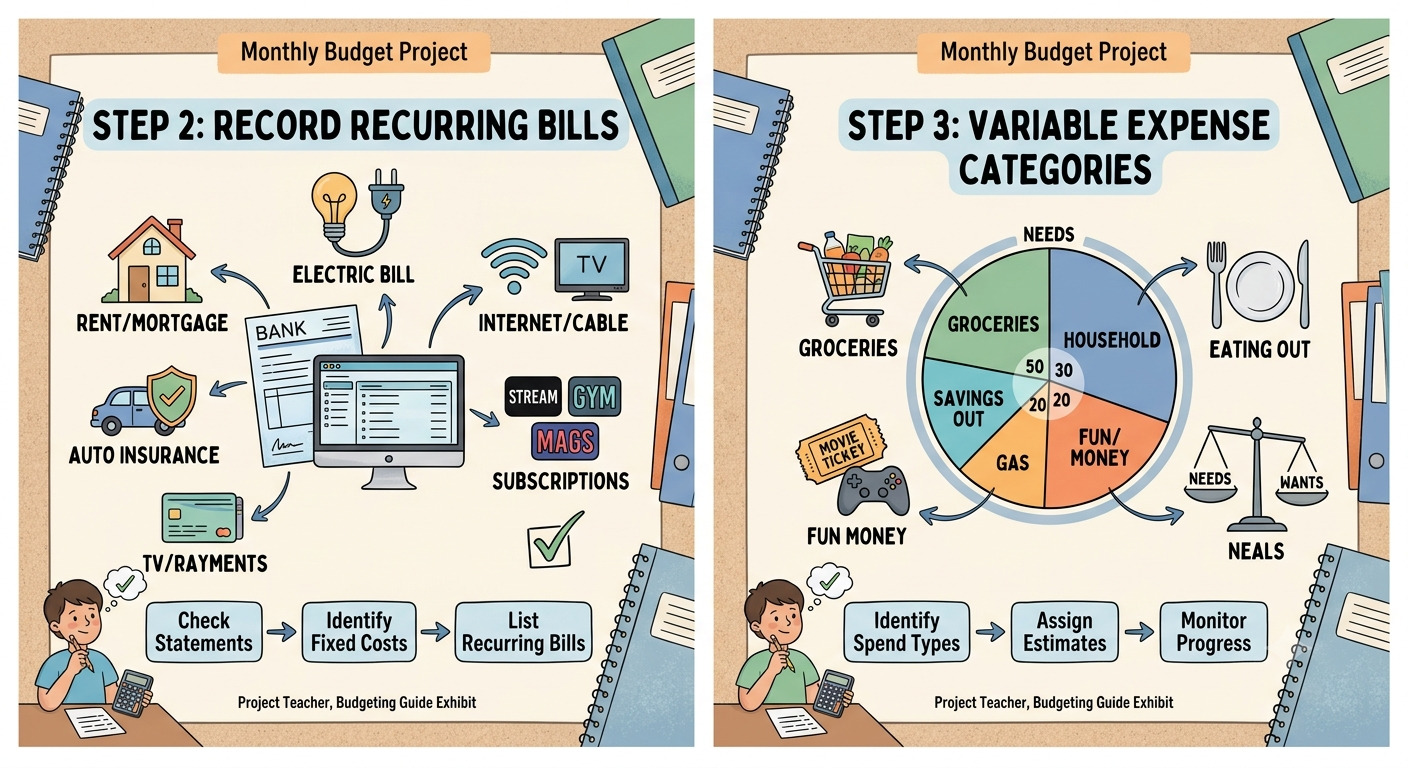
Step 2: List Your Recurring Bills
These are your “non-negotiables”—the expenses that hit your account every month like clockwork.
-
Rent or Mortgage
-
Utilities: Electric, Water, Internet, Phone
-
Insurance: Auto, Life, Health
-
Subscriptions: Netflix, Spotify, Gym memberships
Action Item: Grab your bank statements from the last three months. You’ll be surprised at how many “forgotten” subscriptions you might be paying for that could be reallocated toward your savings goals.
Step 3: Define Your Variable Expenses
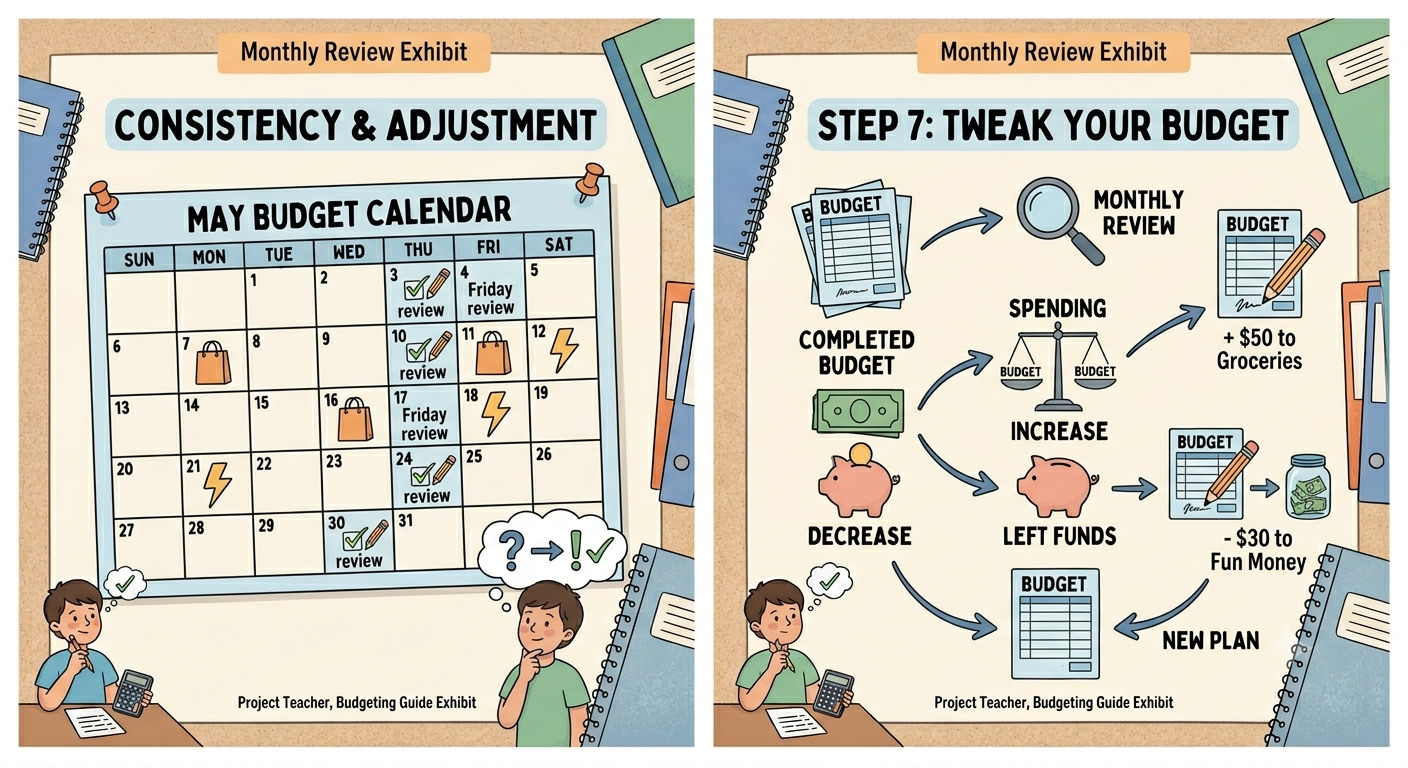
Variable expenses are the “lifestyle” costs—the ones that change based on your choices. This includes groceries, dining out, entertainment, and personal care.
-
The 50/30/20 Rule: If you’re feeling overwhelmed, try this popular framework:
-
50% for Needs: Housing, groceries, basic bills.
-
30% for Wants: Eating out, hobbies, streaming services.
-
20% for Savings/Debt: Padding your emergency fund or paying down credit cards.
-
Step 4: Map Out Your Debt Payments
If you have debt, it’s important to focus on it. Paying just the minimum is a good start, but adding a little extra—like $20 or $50—to your monthly payments can help you pay it off much faster and save you money on interest.
Step 5: Establish Your “Future Self” Savings
It’s easy to focus only on today, but a solid budget includes the “Big Picture.” Whether it’s an emergency fund, a vacation fund, or retirement, treat these as mandatory bills you pay to your future self.
“Budgeting isn’t about limiting yourself; it’s about making your money work for the life you want to live.”
Step 6: The Secret Sauce—Tracking
This is where the magic happens. A budget is just a document until you track your actual spending against it.
-
Find Your Rhythm: Whether you prefer a digital app, a custom spreadsheet, or a classic pen-and-paper binder, pick one and stick to it.
-
Stay Consistent: I personally update my numbers every Friday. It takes 10 minutes, keeps me mindful of my spending, and helps me spot mistakes (or double charges) early.
Step 7: Tweak and Evolve
Your life isn’t static, so your budget shouldn’t be either. If you find yourself consistently overspending in one category, don’t beat yourself up. Maybe that category just needs a more realistic allowance!
Budgeting is a living, breathing process. It takes a few months to dial in your numbers, but once you do, you’ll find a sense of peace that money (literally) cannot buy.
Make a Monthly Budget With Our Budget Planner Below
1. Income Tracker
| Source | Expected Amount | Actual Amount | Difference |
|---|---|---|---|
| Primary Salary | – | – | – |
| Side Hustle | – | – | – |
2. Recurring Bills (Fixed Expenses)
| Bill Name | Due Date | Budgeted | Actual |
|---|---|---|---|
| Rent/Mortgage | – | – | – |
| Utilities | – | – | – |
| Internet/Phone | – | – | – |
3. Variable Expenses
| Category | Budgeted | Actual | Remaining |
|---|---|---|---|
| Groceries | – | – | – |
| Transport/Gas | – | – | – |
| Entertainment | – | – | – |
4. Savings & Debt Goals
| Goal | Target Amount | Amount Saved/Paid |
|---|---|---|
| Emergency Fund | – | – |
| Debt Repayment | – | – |
The “Aha!” Moment That Changed My Bank Account
Two years ago, I sat at my kitchen table looking at a pile of credit card statements. I felt a pit in my stomach. I was working hard, but my money seemed to disappear every month. I kept hoping things would get better, but then unexpected bills or car repairs would stress me out.
Finally, I was tired of the stress. I didn’t want to be rich; I just wanted to feel in control. I opened a simple spreadsheet and started tracking every dollar I spent. At first, it wasn’t easy, and some months I lost my focus. But something changed. By knowing where my money went, I stopped guessing and started making choices. This shift changed my financial stress into confidence, and I want to help you do the same today.
ALSO READ: Must Learn Brilliant Garage Storage Ideas to Finally Reclaim Your Space (2026/2027 Beyond)
Final Thoughts
When you create a monthly budget, you take charge of your finances. Some months will not go as planned, and that is okay. The aim is not to be perfect but to be aware and intentional with your money.
Start today. Keep it simple, and notice how your relationship with money improves!
Are you ready to begin? Get your bank statement, open a new spreadsheet, and take the first step toward your financial goals today.