
How to Organize Every Space in Your House: 8 Simple Steps to Reclaim Your Peace
The "Blank Slate" Secret to Finding More Storage
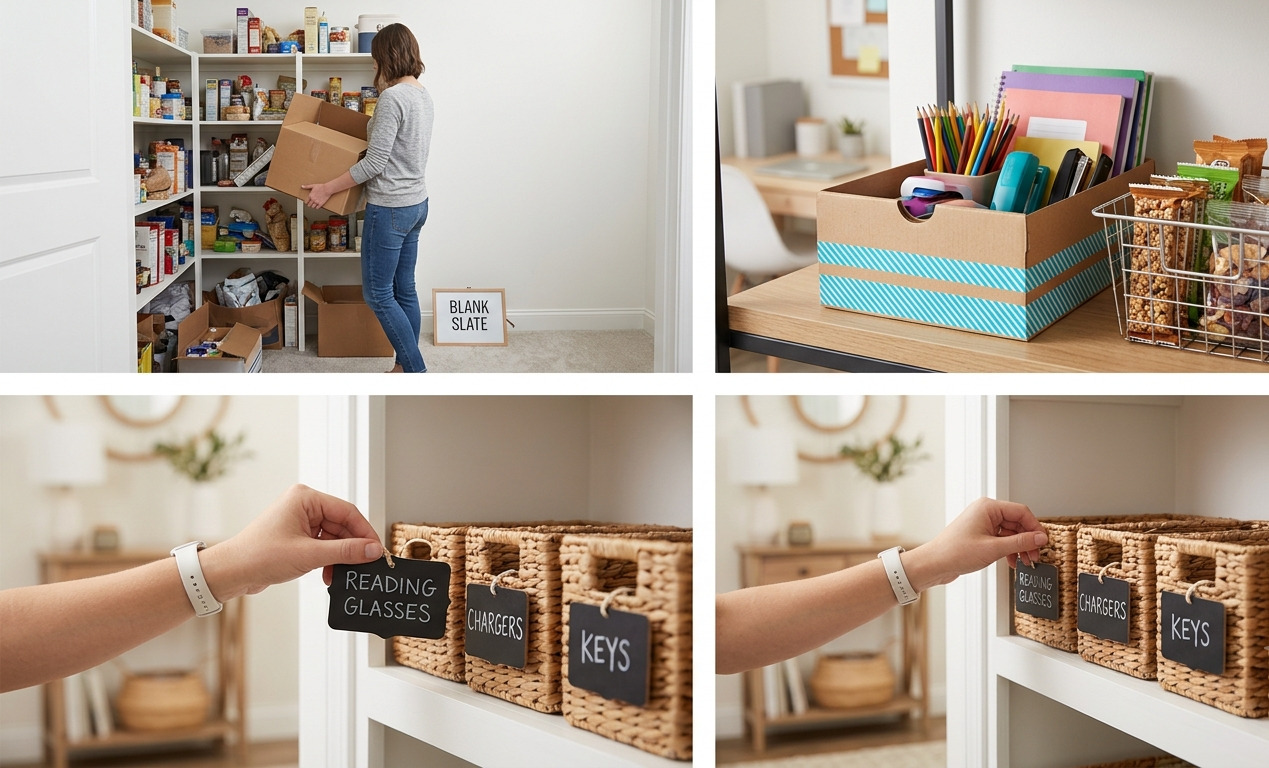
Do you feel like your home is working against you? With piles of mail, a messy junk drawer, and the daily chaos of family life, it can be overwhelming.
I understand. A cluttered home often leads to a cluttered mind. But here’s the good news: you don’t need to be a professional organizer to change your space. You just need a plan.
Whether you want to clean out the kitchen pantry, tackle an overflowing closet, or organize a single bedside drawer, this 8-step guide will help you organize every area of your home for good.
“I used to stand in my living room, feeling overwhelmed by piles of stuff. I thought I just wasn’t organized enough. Then I realized it wasn’t about being perfect; it was about having a plan. If you want to stop feeling like a guest in your own home and take back your space, let’s work on it together, one drawer at a time.”
1. Start with a Blank Slate: Empty the Space
It’s the oldest trick in the book, but it’s essential: Take everything out.
Trying to organize around existing clutter is like trying to paint a wall without moving the furniture. By clearing the space entirely, you gain a clear perspective on exactly how much storage you have and what you are actually working with.
Pro Tip: If the idea of emptying an entire room feels paralyzing, break it down. Don’t organize the “whole kitchen.” Organize the spice cabinet first. Smaller wins lead to bigger motivation.
2. Declutter Like You Mean It
This is the “ruthless” step. If you haven’t used it, loved it, or needed it in the last year, it’s time to let it go.
Ask yourself: Do I want the space, or do I want the stuff? You cannot have both. As you sort, create three piles:
-
Donate/Sell: For items that are still useful but don’t serve your home.
-
Toss: Broken or worn-out items.
-
Relocate: Items that belong in a different room entirely.
3. Group Like Items Together
As you pull items out, start sorting them into categories (e.g., all baking supplies, all chargers, all cleaning products). This is a game-changer. Seeing all your “extras” in one pile often reveals that you own three staplers or four half-used bottles of lotion. This helps you identify what you actually need to keep versus what is just taking up valuable real estate.
4. Master the Art of “Corraling”
Once you have your categories, it’s time to contain them. You don’t need to spend a fortune on expensive, Pinterest-worthy acrylic bins.
Look around your house! Use shoe boxes, old diaper boxes, or baskets you already own. If you want to get creative, wrap them in decorative paper or use washi tape to make them match your aesthetic. Bins within bins are my favorite trick for keeping small items (like batteries or paperclips) from migrating.
5. Label Everything (Yes, Everything!)
Labeling is more than a design choice; it’s a commitment. When every bin is labeled, you (and your family) have no excuse for putting things back in the wrong spot. Whether you use a fancy Cricut machine, a classic label maker, or simple handwritten tags, labels provide the “map” for your organization system.
ALSO READ: Master Your Getaway: The Ultimate Packing List for Organized Travel (Free Printable)
6. Refill with Strategy
Don’t just shove items back into their new homes. Use the “Frequency Rule”:
-
Prime Real Estate: Items you use daily should be at eye level or in the easiest-to-reach spots.
-
The “Occasional” Zone: Items used once a month go on higher or lower shelves.
-
Storage: Rarely used items go in the back or in high-up storage bins.
7. The Habit: “Put it Back”
This is the step that makes or breaks your system. Once your space is organized, you have to train yourself to maintain it.
If you struggle with this, use a visual cue. Stick a bright Post-it note on the fridge or cabinet door that says, “Did you put it back?” It sounds silly, but it builds the muscle memory until maintaining the space becomes second nature.
8. Tweak the Systems That Fail
Finally, give yourself grace. If you set up a drawer system but find it’s a hassle to open every day, change it. Organization is not a “set it and forget it” task. If a system doesn’t work for your lifestyle, it’s not you—it’s the system. Don’t be afraid to pivot to a solution that actually makes your life easier.
Final Thoughts
Organizing your home is not about being perfect; it’s about making it work for you. You can organize every space in your house by following these 8 steps, tackling one small area at a time.
Start by choosing one drawer today. You’ll feel great reclaiming your space!
What area of your home frustrates you the most? Share in the comments below, and I can help you find a solution!
To help your article rank for “People Also Ask” snippets and provide extra value to your readers, add this FAQ section at the end, right before your closing.
Frequently Asked Questions: Organizing Every Space in Your House
Q: I feel completely overwhelmed and don’t know where to start. What should I do? A: Start small. Focus on one drawer or one shelf instead of trying to organize your whole house at once. When you finish that small area, you will feel motivated to move on to the next one. Remember, making progress is about being consistent, not fast.
Q: What is the most ruthless way to declutter? A: A good way to declutter is to use the “One-Year Rule.” If you haven’t used an item in the last 12 months, you probably don’t need it. Ask yourself, “If I were shopping today, would I buy this again?” If the answer is no, it’s time to let it go.
Q: Do I really need to buy expensive storage bins to get organized? A: Don’t buy bins before you declutter! This is a common mistake. Start by using boxes, baskets, or containers you already have at home. Only buy organizers once you know what you are storing and how much space you need.
Q: How do I stop my family from messing up my newly organized spaces? A: Labeling helps everyone know where things belong. When each item has a specific labeled spot, it removes any confusion for others in the house. Use simple visual cues, like a small note or a specific bin, to remind family members where to put things.
Q: How often do I need to re-organize? A: The goal is to maintain your space, not to keep reorganizing it. If you often find yourself needing to reorganize, your system may be too complicated. Don’t hesitate to change your storage methods until they fit smoothly into your daily routine.