
The $38 Million Downfall: How a High-Stakes Cyber Fraud Scheme Ended in 17 Years of Prison
From digital deception to a federal sentencing: The inside story of how one man’s complex multi-million dollar web finally unraveled
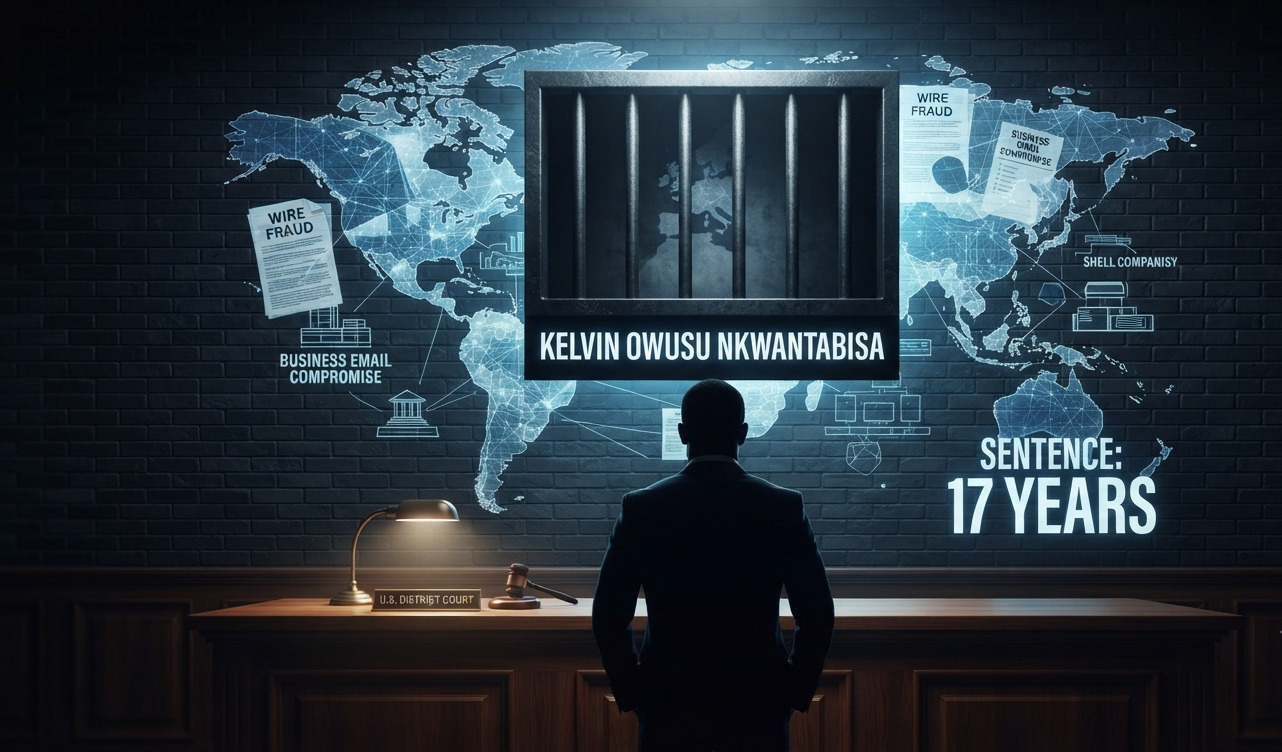
The idea of finding a quick way to get rich is a story that has existed for a long time. However, in our digital world, the risks of chasing this quick wealth have become much greater. For some, the internet offers connection and opportunities. For others, it has become a platform for global crime that can lead to serious consequences, including long prison sentences.
The recent sentencing of Kelvin Owusu Nkwantabisa, a 33-year-old Ghanaian-American from Georgia, shows that digital footprints are permanent and that the law can reach anyone, anywhere.
The Modern Face of Financial Crime
Nkwantabisa, who used names like “Kevin Brown” and “KO,” led a complex scam called business email compromise (BEC). His scheme stole a shocking $38 million from victims in the U.S. and other countries.
Nkwantabisa worked with a large network of people. He guided them to set up fake companies and open bank accounts in several U.S. states to hide the money they stole. The operation was well-planned but fell apart quickly when federal authorities began to investigate.
A Human Perspective: The Weight of a Choice
Imagine sitting in a quiet office, checking your email on a Tuesday morning. You trust that the invoice in your inbox is real. You process the payment, thinking you are doing normal business.
Now, picture the moment you realize that your company’s money—so important after years of hard work—has disappeared into a digital void, sent to accounts you’ll never see. This is the reality for the victims of the $38 million scam.
Behind every big headline about lost millions and court cases are people whose lives were affected. For those involved in the scheme, the impact wasn’t just about money; it shattered the trust needed to do business in today’s connected world.
The Cost of the “Shortcut”
A U.S. court sentenced Nkwantabisa to 17 years in prison for a major operation that caused significant harm to victims. This sentence represents nearly two decades of a life transformed by the law, highlighting the difference between lasting consequences and the temporary riches gained through illegal actions.
ALSO READ: The Ultimate Guide to “Happy Birthday” Wishes for Your Boyfriend: Say It with Love
As investigations into cyber fraud continue, cases like this teach an essential lesson: in the connected world of 2026, being transparent and honest is the only true way to achieve lasting success.