
You Cannot Import These Cars To Ghana: Everything You Need to Know Before October 2026
Why the Ghana Standards Authority is blocking older and damaged vehicles starting this October
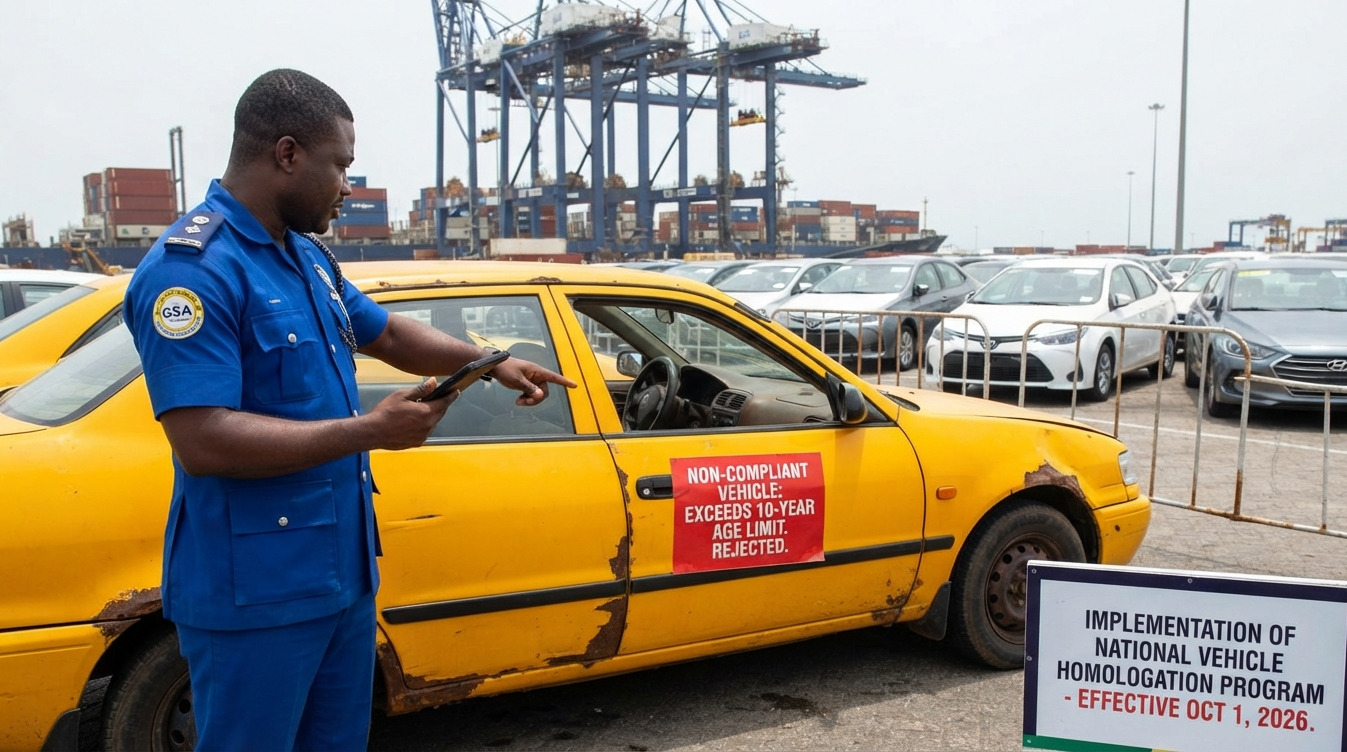
Are you planning to import a vehicle into Ghana? Before you look at international car auction sites or contact a dealer abroad, there’s an important update you need to know. The rules for importing cars to Ghana are changing. If you’re not careful, your vehicle could get stuck at the port, which could cost you time and money.
In this guide, we explain the new regulations from the Ghana Standards Authority (GSA) and what “Cars you cannot import to Ghana” means for you.
A Relatable Story: The “Bargain” That Cost More Than Gold
Kofi is a young professional in Accra. He saved for three years to buy his first reliable car. He found a 2008 model online for about 100,000 GHS, which seemed like a great deal. Kofi felt excited and imagined driving around East Legon.
However, he didn’t consider the challenges of the port system. When the car arrived, he discovered it had many hidden problems, the import duties were very high, and it didn’t meet the new safety standards.
What should have been a step towards independence turned into a frustrating experience at the port. Kofi learned a tough lesson: the cheapest car is not always the best deal.
The Big Change: New GSA Regulations Starting October 1, 2026
The Ghana Standards Authority has announced the strict enforcement of the National Vehicle Homologation and Conformity Assessment Program, commencing October 1, 2026.
This isn’t just about revenue; it’s about safety. For too long, the roads have seen vehicles that are essentially “moving hazards”—fumes billowing from exhausts, vehicles missing vital safety features, and some that are barely holding together.
Cars You Cannot Import to Ghana (The “No-Go” List):
If your vehicle falls into these categories, it will not be allowed to clear customs:
-
Vehicles Older Than 10 Years: Any car manufactured before 2016 is effectively restricted. Note that this is based on the date of manufacture, not the date of registration.
-
Salvage and Damaged Vehicles: If it has been submerged in water (flood-damaged), fire-damaged, or has a compromised chassis/safety cage, it’s out.
-
Right-Hand Drive Conversions: Some vehicles originally built for right-hand drive markets that have been “converted” for left-hand drive traffic will be rejected.
-
Vehicles Assembled from Spare Parts: If a car was built from “bits and pieces” rather than being a complete factory-manufactured unit, it does not meet the standard.
-
Non-Metric Speedometers: If the vehicle lacks a speedometer in kilometers per hour (km/h), it is not compliant.
Why the Change?
For years, the system for importing used cars has been chaotic. Many buyers, like our friend Kofi, have been taken advantage of by dealers who sell “sprayed” accident cars as pristine vehicles.
By enforcing these standards, the government aims to:
-
Protect you from buying “death traps.”
-
Reduce environmental pollution from old, inefficient engines.
-
Bring sanity and regulation to the automotive market.
Expert Tips for Future Car Owners
-
Check the Manufacture Date: Always verify the actual year of manufacture, not just the year it was registered.
-
Avoid “Salvage” Deals: No matter how cheap that “fixer-upper” looks, the cost of clearing and repairs will almost always exceed the price of a newer, compliant vehicle.
-
Embrace Transparency: The market is slowly shifting toward newer, more reliable models (including new Chinese brands) because they come with warranties, financing options, and lower maintenance costs.
-
Do Your Homework: Before you pay a single Cedi, calculate the total cost of ownership—including duty, shipping, and the risk of the car being rejected.
MUST READ: Beyond the Pitch: How Man City in South Korea Captured Hearts During the 2026 Asia Tour
Final Thoughts
Don’t let your dream of owning a car turn into a disaster at the port. By October 2026, you won’t be able to import just any car. Focus on safety, check your documents, and make sure your next vehicle meets Ghana’s new standards.
Want to learn more about the current state of the Ghanaian car market? Watch this insightful breakdown from Kwadwo Sheldon Studios here: Ei Ei You Cannot Import These Cars To Ghana
Disclaimer: This information comes from recent regulatory announcements. Before you import any vehicle, always check with a licensed clearing agent or the Ghana Standards Authority.