
The True Economics of Game Development in India: Beyond the Cost Myth
Beyond the Hype: The Hidden Financial Realities That Every Indian Game Studio Needs to Know
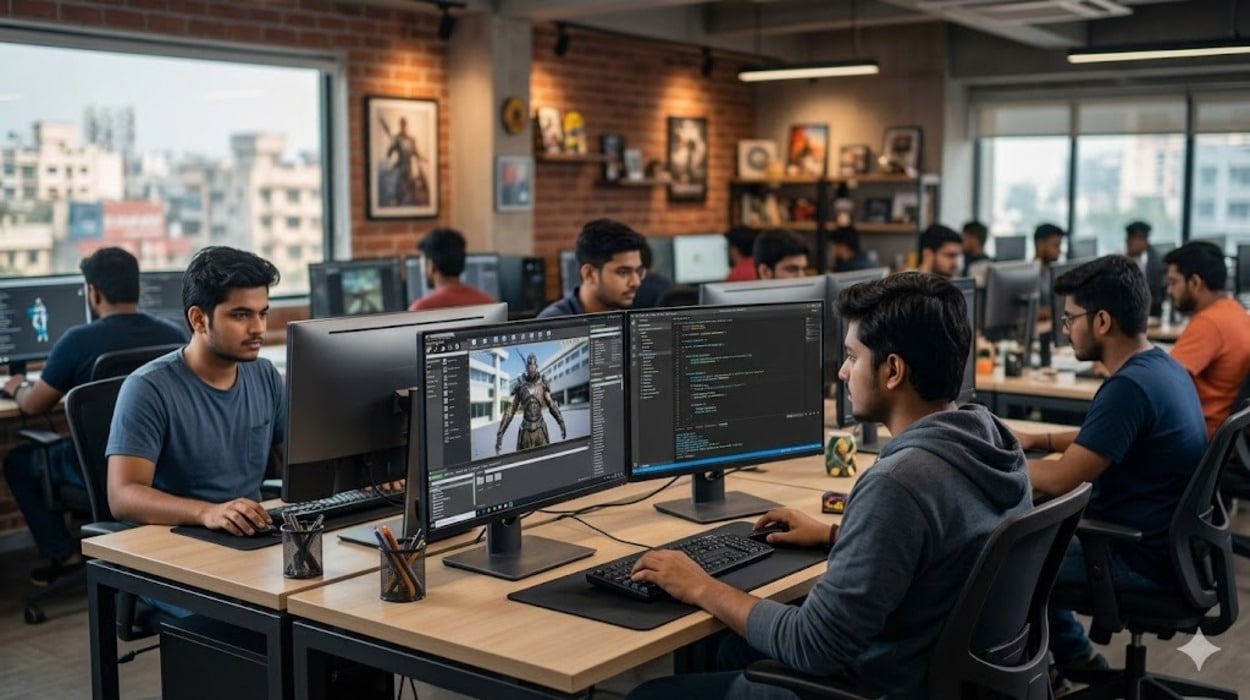
In discussions about the substantial budgets of AAA titles, attention often turns to the high salaries found in tech hubs such as San Francisco and Seattle. This has led to a common assumption that game development in countries like India, with its lower cost of living and more moderate salary expectations, is a less expensive venture.
However, for a new generation of Indian studios that are stepping beyond outsourcing to focus on original intellectual property (IP) for PC and console games, this assumption may not align with the realities of production costs. To fully understand the dynamics involved, it is essential to examine the financial aspects of production rather than rely solely on the narrative of “cheap labor.”
The “Salary vs. Burn Rate” Misconception
One of the most frequent mistakes that first-time founders make is mistaking salary for burn rate. While entry-level salaries for junior developers in India can indeed seem appealing—typically falling between INR 3.5 to 9 lakhs per annum—it’s important to remember that this figure doesn’t reflect the full cost of hiring talent.
As seasoned journalist Jason Schreier points out, the actual expense of an employee to a studio is the gross salary multiplied by a factor of 1.3 to 1.5. This adjustment takes into account:
-
Infrastructure: High-end hardware and workstations.
-
Software Licensing: Tools like Unreal Engine or Unity Pro.
-
Overhead: Amortized office rent, administrative costs, and legal compliance.
A developer earning INR 12 lakhs per year might actually cost a studio closer to INR 1.4 lakhs per month once these overheads are factored in.
The Financial Reality of an Original IP Project
To understand the scale of investment required, let’s model a mid-scale original IP project. Imagine a studio of 30 people—a lean team for a console or PC game—working over a three-year development cycle.
-
Monthly Burn: At INR 1.4 lakhs per person, a 30-person team burns INR 42 lakhs per month.
-
Annual Staff Cost: Roughly INR 5.04 Cr.
-
Total Three-Year Staffing Cost: Approximately INR 15.12 Cr.
READ ALSO: Godzilla: Destroy All Monsters Melee Remastered – The King of Kaiju Brawlers Returns in 4K
When you add non-staff expenses—platform submission fees, marketing, sound design, and localization—you are looking at a total budget in the range of INR 17 to 18 Cr (approx. $1.77M to $1.87M).

For a startup without publisher backing, this is a significant financial commitment, often exceeding what traditional Indian venture capital firms are prepared to risk on an unproven IP.
Why the Cost Advantage is Narrowing
While India remains six to eight times cheaper than Western studios, the competitive advantage is narrowing due to two primary factors:
-
Complexity and Timeline Creep: As game technology evolves, development cycles are lengthening. First-time developers frequently underestimate development time by 50% to 100%. A one-year delay on a 30-person team can add over INR 5 Cr to the total budget.
-
The Senior Talent Gap: While entry-level talent is abundant, experienced console developers and senior rendering engineers are scarce. This scarcity drives up the salary curve at the senior end, meaning the “cost savings” of the Indian market evaporate exactly where a high-quality, original IP project needs the most support.
A Path Forward: From Back Office to Original Creators
The failure of well-known local projects in recent years shows that you can’t just hope for a successful game. To succeed in the competitive world of game development, you must manage your budget carefully, just like you manage the game design.
Strategies for Sustainable Growth:
-
Build the Track Record: Studios should prioritize smaller, high-quality titles first to build a financial track record. This makes the case for larger funding rounds significantly easier.
-
Leverage Outsourcing Wisely: Rather than viewing outsourcing as a permanent state, successful studios use these contracts as a “funding mechanism.” The revenue generated from providing services to international clients should be reinvested into the R&D of original IP.
-
Plan for the Long Term: Founders must conduct rigorous financial modeling before writing a single line of code. Know your burn rate, account for overhead, and prepare for the inevitable delays that accompany ambitious creative work.
The Indian game development industry has significant potential, but its future will be shaped by studios that focus on scalability, sustainability, and creative discipline rather than solely on cost-cutting.
The Experimental Era (1950s–1960s)
Game development began not in studios, but in university research labs. Early scientists used mainframe computers to test programming capabilities rather than for entertainment.
-
Key Milestones: Early programs included Bertie the Brain (1950) for Tic-Tac-Toe and OXO (1952). In 1958, physicist William Higinbotham created Tennis for Two on an oscilloscope—often cited as the first game built specifically for fun. By 1962, Spacewar! became the first widely shared digital game among computer science students.
The history of game development started as academic experiments in the 1950s and grew into a global industry worth billions of dollars. Here is a simple timeline of how it changed:
The Birth of the Industry (1970s)
The 1970s marked the transition from “lab curiosities” to commercial products. Developers began creating games for the mass market, giving birth to the arcade and home console sectors.
-
Key Milestones: Computer Space, released in 1971, was the first arcade game you could play for money. This was followed by Atari’s Pong in 1972, which became a huge hit. At the same time, Ralph Baer created the “Brown Box” prototype, leading to the Magnavox Odyssey, which was the first home video game console, also launched in 1972.
3. The Golden Age & Expansion (1980s)
This era saw the standardization of game development. Titles like Pac-Man (1980) and Donkey Kong (1981) turned characters into global icons and video games into a staple of pop culture.
-
Key Milestones: Developers shifted from single-person hobbyist projects to professional teams. The rise of the Nintendo Entertainment System (NES) in the mid-80s revitalized the market after a period of instability, cementing the template for modern game design, platforming, and narrative-driven experiences.
4. The Modern Era (1990s–Present)
The gaming industry grew rapidly with the rise of 3D graphics, CD-ROMs, and the internet. Game development evolved from simple 2D images to detailed, cinematic worlds. This shift changed small teams into large, global studios with many different specialists.