
The Digital Plate: Finding the Right Food Tracking App for Your Lifestyle
Stop Guessing Your Macros: How Modern AI Tech Finally Makes Healthy Eating Simple
We’ve all been there: looking at a snack and wondering if it fits into our daily goals or trying to keep up with our health plans.
Take my friend Sarah, for example. Sarah spent years guessing her portion sizes. She thought her “healthy” salads were balanced, but she was actually eating too little protein and too much dressing. She felt tired and frustrated. It wasn’t until she started using a food tracking app that she learned about her habits. She wasn’t just making guesses anymore; she saw how her afternoon snacks affected her evening energy levels. Within weeks, the app became her most trusted partner in staying accountable.
If you want to gain that same clarity, you’re in the right place. Food tracking apps have improved a lot. They are now smart tools that can help you understand your nutritional needs.
Our Top Picks at a Glance
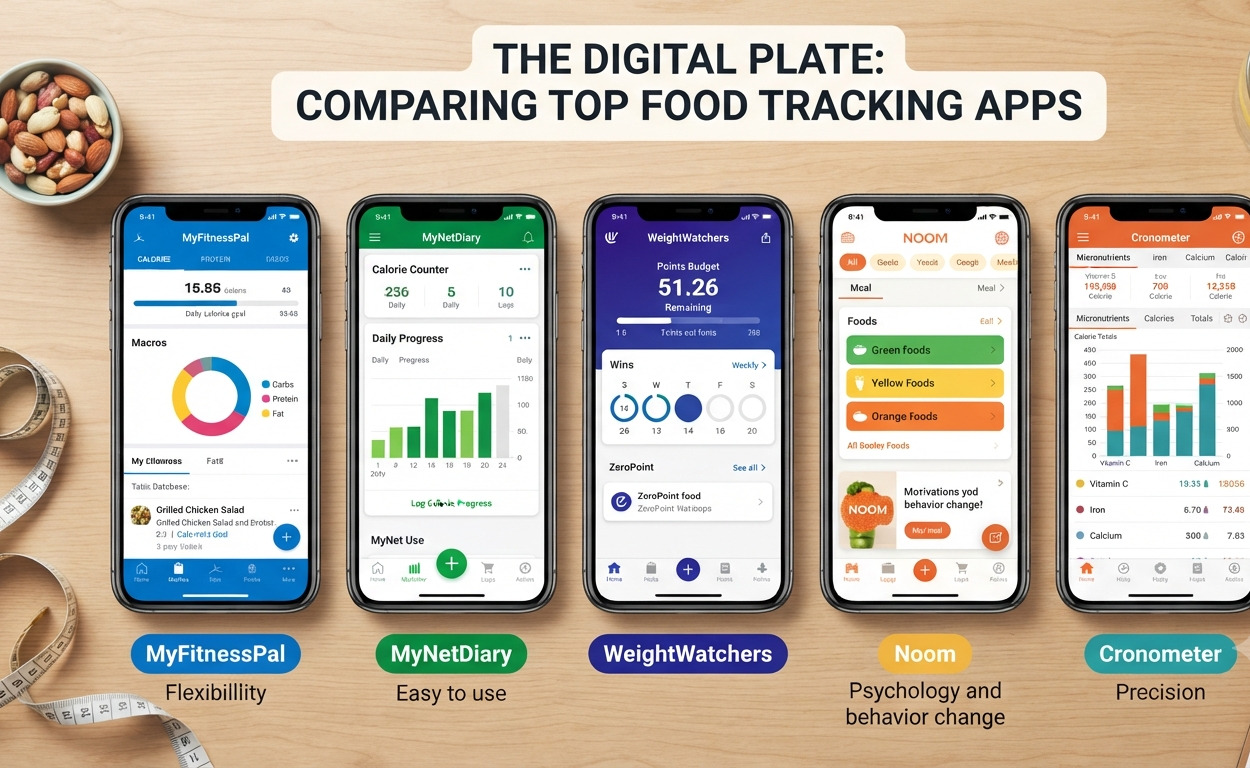
Choosing the right tool matters more about how it fits your needs than just its features. Here’s how our experts explain the current options for tracking nutrition:
| Category | Recommended App | Best For |
| Best Overall | MyFitnessPal | Flexibility & vast database |
| Best Free | MyNetDiary | Feature-rich without a subscription |
| Best for Community | WeightWatchers | Guidance & accountability |
| Best for Weight Loss | Noom | Psychology-based behavior change |
| Best for Data | Cronometer | High accuracy & micronutrient tracking |
Why Use a Food Tracking App?
Food tracking apps do more than just help you log your meals; they show your eating habits. By tracking what you eat, you create feedback that helps you:
-
Increase Awareness: You’ll quickly identify “mindless” habits, like that handful of office candy that doesn’t feel like much until you see the numbers.
-
Improve Accountability: Having a record makes you more intentional about your choices throughout the day.
-
Reach Specific Goals: Whether you are looking to increase your fiber, track iron intake, or hit a specific protein target for muscle gain, these apps provide the data you need.
How to Choose the App That Fits You
“If something is complicated or takes a lot of time, most people struggle to turn it into a habit,” says registered dietitian Gillean Barkyoumb, M.S., R.D.N. Before you download the first app you find, think about these factors:
-
Your Specific Goal: Are you looking to lose weight, gain muscle, or simply manage a health condition?
-
User Experience: If you want a “set it and forget it” experience, look for apps with AI photo scanners (like those found in Lose It! or Simple).
-
Database Accuracy: If precision matters to you, Cronometer is a standout because it verifies every food entry, whereas many others rely on user-generated data.
-
Integration: Check if the app syncs with your fitness tracker, Apple Health, or Fitbit.
A Note on Balance and Sustainability
These tools are very helpful, but they should not replace professional advice. Be careful: tracking everything can become too strict or even obsessive for some people. Remember that your health involves more than just counting calories. Things like sleep quality, stress levels, and emotional health are just as important.
Use these apps to help you develop better habits, not to create stress. If tracking makes you anxious, consider taking a break and focus on eating mindfully instead.
Food Tracking App Pricing & Links
| App | Website | Starting Pricing / Subscription Info |
| MyFitnessPal | myfitnesspal.com | Free tier available; Premium starts at ~$79.99/year or ~$99.99/year for Premium+. |
| MyNetDiary | mynetdiary.com | Free tier available; Premium is ~$59.99/year (~$8.99/mo); Premium Plus (with AI) is ~$14.99/mo. |
| WeightWatchers | weightwatchers.com | Plans typically start as low as ~$12/mo, depending on the program selected. |
| Lose It! | loseit.com | Free tier available; Premium is ~$39.99/year. |
| Noom | noom.com | Subscription-based; pricing varies significantly by plan duration, ranging from ~$70/mo to ~$209/year. |
| Cronometer | cronometer.com | Free tier available; Gold subscription is ~$59.99/year or ~$10.99/mo. |
| Lifesum | lifesum.com | Free tier available; Premium plans vary by duration, typically $44.99–$119.99/year. |
| Yazio | yazio.com | You can use the free tier. The cost of the Pro subscription depends on your location and any current promotions. |
| Simple | simple.life | Free tier available; Premium plans range from ~$49.99–$59.99/year (or ~$14.99/mo). |
Quick Tips for Finding the Best Price
-
Web vs. App Store: If you use apps like Simple, check the website directly. You may find lower prices or better discount codes than what is available on the Apple App Store or Google Play Store.
-
Annual Savings: Almost every app on this list offers a significant discount if you commit to an annual plan rather than paying monthly.
-
Try the Free Tier First: Many of these apps, especially MyNetDiary and Cronometer, have strong free versions. It’s a good idea to use the free version for a week to see if the interface suits your logging style before paying for a subscription.
Final Thoughts
The best app is the one you can easily use every day. Start by figuring out your main goal. Download a few options and try them out. You may find, like Sarah, that even a little data can help you live a healthier and more intentional lifestyle.
READ: Homemade Christmas Card Ideas: DIY Projects to Warm Hearts This Season
Frequently Asked Questions (FAQ)
Are food tracking apps really accurate?
Most apps give a good estimate, but they’re not always 100% accurate. Apps that use data from users can sometimes have mistakes. To get the most accurate information, choose apps like Cronometer that check their database entries. Also, look for items with a “verified” checkmark in your app.
Is it necessary to track food forever?
Not necessarily. Many people use food tracking as an educational tool. After a few months, you may find that you’ve developed a better understanding of portion sizes and nutritional content, allowing you to move toward more intuitive eating without needing to log every single meal.
Do I have to pay for a premium subscription?
Many popular apps have strong free versions that include key features like tracking calories, water intake, and basic activities. You should consider paying for the premium version only if you want specific advanced features, like AI photo scanning, detailed nutrient breakdowns, or custom meal plans.
Can these apps help if I have a specific health condition?
Yes, but with a caveat. While these apps are excellent for tracking sodium, fiber, or protein, they should not replace medical advice. If you are managing a condition like diabetes or hypertension, it is essential to work with a registered dietitian or your physician to ensure the targets set by the app are safe and appropriate for your medical history.
What is the biggest mistake people make with food tracking?
Many people make the mistake of “tracking burnout.” When you try to track every single bite very precisely, it can become tiring. If tracking starts to feel like a duty or makes you anxious, you might stop using the app altogether. Focus on being consistent instead of trying to be perfect.
Are you using a food tracking app? If yes, what feature can you not live without?