
The Ultimate Guide to Indoor Plants: 25 Hard-to-Kill Plants Even Beginners Can Keep Alive
Stop killing your greenery: These bulletproof, low-maintenance houseplants actually thrive on neglect—even if you have a lifelong black thumb
Every aspiring plant parent experiences a humbling moment. Take my friend Sarah, for example. She bought a delicate fern because it looked beautiful on Instagram. She named it “Fernie Sanders,” talked to it every day, and carefully misted it. But within three weeks, Fernie became a crispy, brown mess, and she had to bury it in the backyard with sadness.
After that, Sarah decided to give up on plants, thinking she had a “black thumb.” But the real issue was that the plant was too hard to care for.
If you’ve ever killed a houseplant and blamed yourself, relax. Bringing nature indoors should not feel like a stressful science project. Whether you want to brighten a dark corner, add height to your living room, or find low-maintenance plants that can survive neglect, this guide will help you.
Let’s explore the best indoor plants for beginners that are nearly impossible to kill!
Why You Need Indoor Plants in Your Life
Before we discuss the green list, let’s talk about the benefits of having houseplants. Experts agree that having plants in your home can greatly improve your wellbeing. Plants help:
-
Reduce daily stress
-
Boost your mood
-
Increase focus and productivity
-
Purify indoor air
Keep scrolling to find the right houseplant for your lifestyle, complete with sunlight, watering guides, and safety notes.
The Ultimate List of Hard-to-Kill Indoor Plants for Beginners
1. Snake Plant (Sansevieria)
If there is an undisputed monarch of hard-to-kill plants, it’s the snake plant. Its stiff, sharp, spiky leaves store water efficiently, meaning you can literally forget about it for weeks.
-
Water: Once per month.
-
Sunlight: Bright to medium indirect sunlight (can adapt to low light).
-
Note: Toxic to cats and dogs.
2. ZZ Plant (Zamioculcas zamiifolia)
Referred to by botanists as “the king of the indestructible plants,” the ZZ plant easily tolerates the dangerous trifecta of plant-killers: drought, low light, and low humidity. Its glossy, vibrant green leaves add instant elegance.
-
Water: Every two to three weeks (more often if in bright sun).
-
Sunlight: Medium to bright indirect light, but handles low light like a champ.
-
Note: Toxic to cats and dogs.
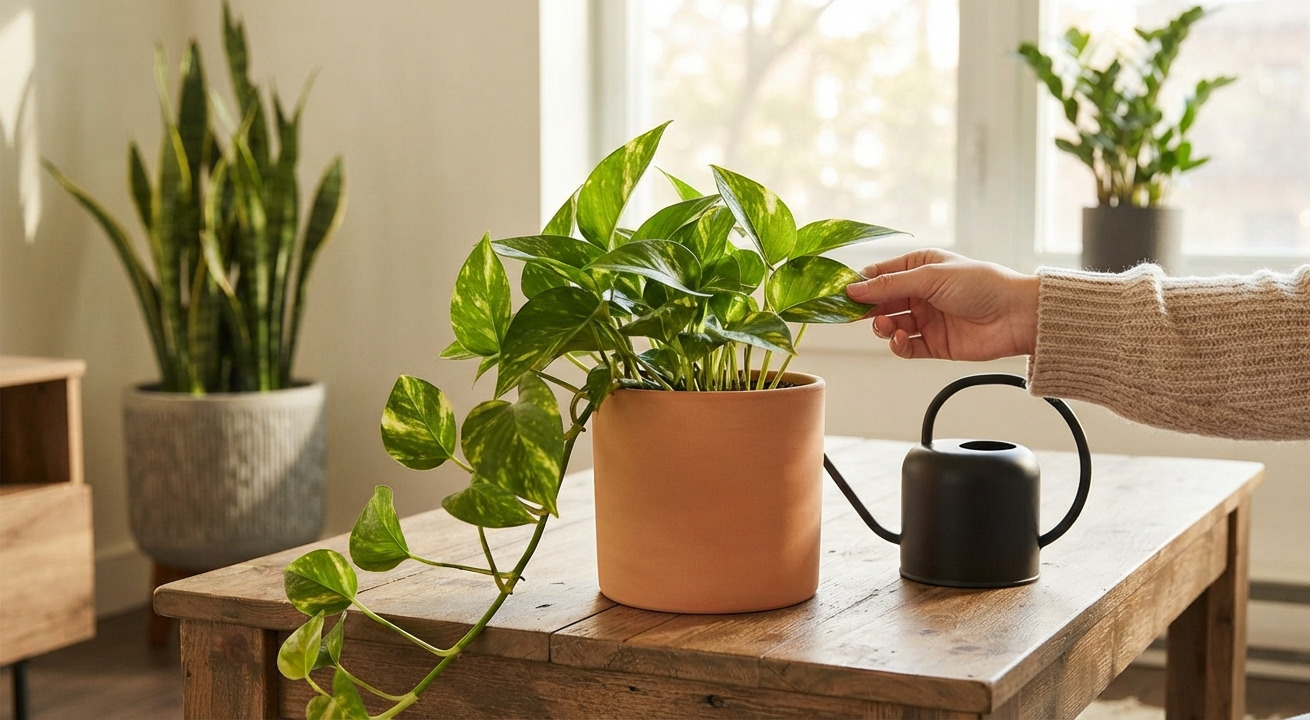
3. Pothos (Epipremnum aureum)
Calling all absolute beginners: this trailing vine has earned the cheeky nickname “devil’s ivy” because it survives nearly pitch-black conditions, under-watering, and over-watering.
-
Water: Every one to two weeks, once the soil is completely dry.
-
Sunlight: Bright, indirect light, but heavily tolerant of low light.
-
Note: Toxic to cats and dogs.
4. Cast Iron Plant (Aspidistra elatior)
True to its name, this hardy plant features striking sword-like leaves that refuse to give up. Native to Japan and China, it tolerates fluctuating temperatures, low light, and infrequent watering with ease.
-
Water: Every one to two weeks (ensure the top inch of soil is dry).
-
Sunlight: Low to moderate indirect sunlight.
5. Chinese Evergreen (Aglaonema)
Looking for effortless beauty? The Chinese Evergreen features stunning green leaves striped with silver, cream, or bold red. It requires minimal fuss to look like a tropical masterpiece.
-
Water: Every 5 to 10 days (watch out for soggy soil).
-
Sunlight: Low to bright indirect light.
-
Note: Toxic to cats and dogs.
6. Peace Lily (Spathiphyllum)
Peace lilies are absolute lifesavers for people who tend to overwater their greenery. Give them proper indirect light, and you’ll be rewarded with gorgeous spade-shaped white blooms.
-
Water: Once per week.
-
Sunlight: Bright, indirect light, but tolerates low light.
-
Note: Toxic to cats and dogs.
7. Spider Plant (Chlorophytum comosum)
What’s better than one spider plant? Dozens of them! These fast-growing green champions produce tiny “babies” (pups) that you can easily snip and re-pot to expand your indoor jungle.
-
Water: Once per week.
-
Sunlight: Bright to moderate indirect sunlight.
8. Air Plants (Tillandsia)
Say goodbye to messy potting soil. Tillandsia species grow entirely without dirt, absorbing moisture and nutrients through their leaves.
-
Water: Dunk them in water for 2–3 hours every 10–14 days, or mist a few times a week.
-
Sunlight: Bright, indirect light.
9. Jade Plant (Crassula ovata)
The jade plant stores water in its thick, round leaves, allowing it to survive for weeks without attention. According to folklore, it is also a symbol of friendship, luck, and prosperity.
-
Water: Once every two weeks, strictly when soil is completely dry.
-
Sunlight: Bright sunlight for about 6 hours per day.
-
Note: Toxic to cats and dogs.
Statement Indoor Trees & Large Floor Plants
10. Monstera Deliciosa (Swiss Cheese Plant)
Famous for its dramatic, heart-shaped leaves with natural splits and holes, the Monstera Deliciosa brings an instant tropical vibe to any empty corner.
-
Water: Every one to two weeks.
-
Sunlight: Bright to medium indirect sunlight.
-
Note: Toxic to cats and dogs.
11. Money Tree (Pachira Aquatica)
Recognized by its iconic braided trunk and lush canopy, the money tree is believed to invite good luck and prosperity into your workspace or living room.
-
Water: Every one to two weeks (let the soil dry 50% first).
-
Sunlight: Bright, indirect sunlight for six hours a day.
12. Bird of Paradise (Strelitzia nicolai)
Boasting massive, glossy, banana-like leaves, this plant transforms any indoor space into a luxury resort. It thrives on warm air and abundant light.
-
Water: Every one to two weeks, allowing soil to dry halfway down.
-
Sunlight: Bright indirect or direct light.
13. Yucca Cane Plant (Yucca elephantipes)
Defined by stiff, pointed, sword-like leaves atop a woody stem, the yucca is practically built for sunshine lovers who occasionally forget to water.
-
Water: Every 10 to 14 days when the soil is completely dry.
-
Sunlight: Bright, direct or indirect light.
-
Note: Toxic to cats and dogs.
14. Parlor Palm (Chamaedorea elegans)
Bring classic retro charm indoors with the soft, lush fronds of the parlor palm. They love humidity and can eventually grow up to six feet tall.
-
Water: Every one to two weeks.
-
Sunlight: Medium to bright indirect light (tolerates low light).
Stunning Trailing Vines & Colorful Indoor Foliage
15. Scindapsus
Featuring heart-shaped leaves splashed with silver variegation, scindapsus looks incredible whether it’s left to cascade down a bookshelf or styled inside a hanging basket.
-
Water: Every one to two weeks, ensuring soil is fully dry before watering.
-
Sunlight: Medium to bright indirect light.
16. String of Pearls (Senecio rowleyanus)
An unusual, whimsical succulent featuring trailing stems lined with small, spherical, pea-like beads.
-
Water: Every two to three weeks; keep soil lightly moist.
-
Sunlight: Bright indirect sunlight with some morning direct sun.
-
Note: Toxic to cats and dogs.
17. String of Hearts (Ceropegia woodii)
True to its name, this delicate-looking trailing plant sports adorable, multi-toned, heart-shaped leaves on vines that can grow up to 12 feet long.
-
Water: Every one to two weeks, when the soil is 2/3 dry.
-
Sunlight: Bright, indirect light (south- or west-facing windows are best).
18. Red Prayer Plant (Maranta leuconeura)
Fascinating and dynamic, this plant gets its name because its oval, red-veined leaves fold upward at night, resembling hands folded in prayer.
-
Water: Every one to two weeks, keeping soil consistently (but not soggy) moist.
-
Sunlight: Bright to moderate indirect light.
19. Rubber Plant (Ficus elastica)
With dark, glossy leaves that feature subtle pinkish-red undertones, the rubber plant makes a bold statement without demanding excessive care.
-
Water: Once per week when the soil feels dry.
-
Sunlight: Bright, indirect light.
-
Note: Toxic to cats and dogs.
20. Fiddle Leaf Fig (Ficus lyrata)
A favorite among interior designers, its massive violin-shaped leaves command attention. While slightly more particular than a snake plant, it rewards careful owners with years of breathtaking beauty.
-
Water: Every 7 to 10 days.
-
Sunlight: Bright direct or indirect light.
21. English Ivy (Hedera helix)
Whether trained upward onto a topiary frame or left to cascade over a fireplace mantel, English Ivy adds timeless English garden charm.
-
Water: Every one to two weeks, letting the top inch of soil dry.
-
Sunlight: Medium to bright indirect light.
-
Note: Toxic to cats and dogs.
22. Orchid
If you want vibrant, long-lasting flowers without a greenhouse setup, a potted moth orchid is your best bet. They thrive wonderfully in office environments!
-
Water: Once per week.
-
Sunlight: Bright, indirect light.
23. Dracaena Marginata (Dragon Tree)
Showcasing spiky, multi-colored foliage with detailed crimson borders, this air-purifying plant sits happily in narrow spaces or forgotten room corners.
-
Water: Every one to two weeks.
-
Sunlight: Partial to bright indirect light.
-
Note: Toxic to cats and dogs.
24. Peperomia
Peperomias store emergency moisture in their thick stems and leaves, making them exceptionally drought-tolerant and compact enough for desks or kitchen counters.
-
Water: Every one to two weeks, letting topsoil dry out completely.
-
Sunlight: Medium to bright indirect light.
25. Dieffenbachia (Dumb Cane)
This plant is popular for its tropical, lush leaves that have creamy white and dark green patches. It makes a great addition to areas with low light.
-
Water: Every one to two weeks when the top few inches of soil are dry.
-
Sunlight: Bright indirect light, tolerates low light.
-
Note: The sap can be toxic to pets and children if ingested.
Frequently Asked Questions (FAQs)
What are the absolute best indoor plants for absolute beginners?
If you are worried about keeping plants alive, start with a Snake Plant, ZZ Plant, or Pothos. These three types of plants are easy to care for and can survive with less watering and low light, making them great choices for beginners.
How often should I water my indoor plants?
Watering frequency depends heavily on the plant species, the season, and your home’s humidity. However, a general rule of thumb for most beginners is to check the soil depth: if the top 1 to 2 inches of soil feel completely dry, it’s usually time to water. Succulents and snake plants prefer drying out entirely between waterings.
Which indoor plants thrive in low-light rooms?
If your space lacks direct sunlight, look for varieties like the ZZ Plant, Snake Plant, Cast Iron Plant, and Pothos. They can easily adapt to rooms with minimal windows or fluorescent office lighting.
Are all indoor plants safe for pets?
Many popular houseplants, like Monsteras, Snake Plants, Pothos, and ZZ Plants, can be toxic to cats and dogs if they eat them. Always check if a plant is safe before buying it, especially if you have curious pets. Instead, consider choosing pet-safe options like Parlor Palms or Prayer Plants.
READ: Budget-Friendly Living: The Best Couches at Walmart That Won’t Break the Bank
Final Tips for Plant Success
Don’t let past gardening mistakes stop you. Choose one or two hardy plants from this list, like a Snake Plant or a ZZ Plant. Put them in the right light, and watch your confidence grow along with your new green friends!